Uncategorized
- Earth
Thunderstorms churn up a ‘boiling pot’ of high-energy gamma rays
A thunderstorm seen in gamma ray vision plays out as a complex, frenzied lightshow above the clouds.
- Science & Society
Scientists Say: Dialect
Different dialects of the same language have distinct words, pronunciations and sentence structures.
- Animals
Werewolves could learn from other critters when to hunt
Werewolves aren’t the only creatures that undergo transformation under the full moon. But could weak werewolves be at risk of becoming prey?
- Animals
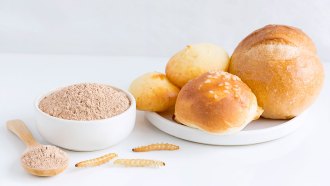
How to make ‘worms’ more nutritious — and easier to swallow
Extracting protein from insect larvae could lead to a healthful food ingredient — and you never have to bite into crunchy legs or squishy bodies.
- Psychology
Struggling to find happiness? Here are some paths to positivity
Teens can become happier by being kind to themselves and connecting with others — in person, rather than online.
- Earth
Analyze This: Why do atmospheric ‘ghosts’ glow green after red sprites?
Green ghosts — blurs of light that sometimes follow lightning — get their color from oxygen and metals in space dust.
- Animals
Let’s learn about animal cannibals
The animal kingdom is full of creatures that eat their parents, their babies, their siblings or their mates.
- Plants
Explainer: How a seed grows into a plant
Plants use carbon from the air to make food and build shoots, roots and more. They adapt and respond to their environments in many incredible ways.
- Artificial Intelligence
Scientists Say: Deepfake
Seeing should no longer mean believing, now that AI tech makes creating fake videos, audio and images easier than ever.
- Animals
Magic helped this researcher trick birds for research
At the National University of Singapore, Elias Garcia-Pelegrin looks at how magic can help us understand animal intelligence.
- Brain
Here’s why being creative is good for your brain
Neuroarts, a new field of science, is finding that exposure to arts can improve learning, behavior and mental health.
- Planets
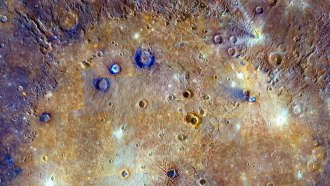
Experiment: Make your own craters!
Let’s make our own craters in cocoa and flour to learn how these features form throughout the solar system — and why they’re different sizes.