Frozen poop reveals Ice Age squirrels’ ecosystem
DNA stored in ancient scat shows the Yukon rodents ate their way through the food chain
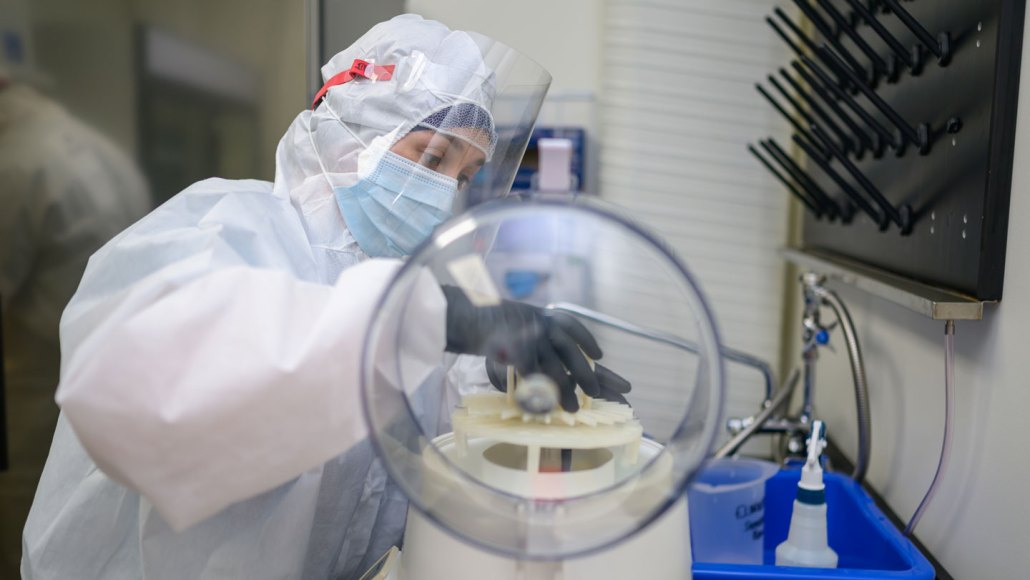
Researcher Danielle Grant studies ancient genomes. Here, she loads fecal samples into a centrifuge — a spinning device that separates materials — to extract ancient DNA fragments. She’s suited up to avoid contaminating ancient poop with modern genes.
Bennett Whitnell/Hakai Institute
This is a human-written story voiced by AI. Got feedback? Take our survey . (See our AI policy here .)
Frozen, ice-age squirrel poop doesn’t stink. At least not at first. But that changes if it warms. As it thaws, the smell shows fecal pellets are not just stony fossils. And as a new study shows, they can host DNA and clues to what ancient squirrels had dined on.
Melting feces release a pungent smell.
“There’s no mistaking. This is a very poopy-smelling lab,” says Tyler Murchie. He’s an archaeologist in Canada who studies ancient DNA. He works at the Hakai Institute in Heriot Bay, British Columbia. His team has been analyzing prehistoric squirrel scat.
In it, they turned up fragments of DNA — molecules that hold a cell’s operational instructions. The scat DNA pointed to what the squirrels had eaten. It now also helps paint a newly detailed picture of the squirrels’ ecosystem.
Murchie and his colleagues shared what they learned June 9 in Nature Communications.
A gold mine’s frozen treasure
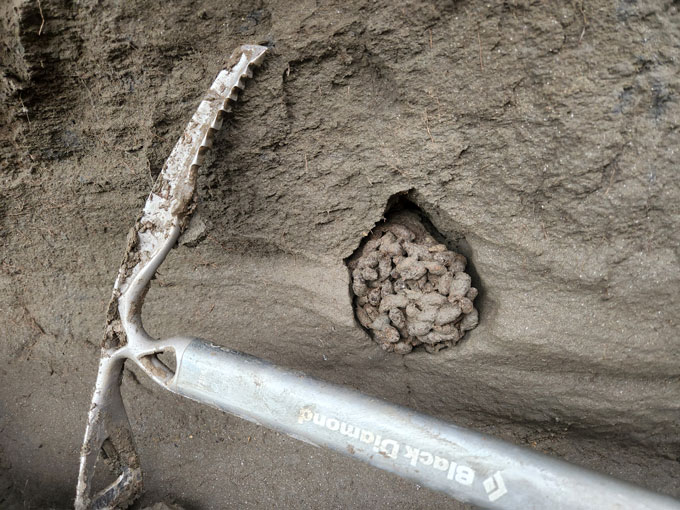
Miners uncovered these fecal pellets. They melted Yukon permafrost to expose gold, Murchie says. This also turned up bones and the mummified remains of ancient creatures. For instance, they found bones of mammoths and steppe bison.
As the miners’ work progresses, eventually “you see these large exposures on the valley walls,” he notes. “There’s all these little pockets.” Those holes are the remains of ground squirrel burrows (genus Urocitellus).
Their homes are literally frozen in time. “They have little latrine areas and tunnel networks and caches of food,” Murchie says. (Sometimes, they even host frozen squirrels.)
Squirrels “really function as little naturalists or archivists,” Murchie says. Like “pack rats,” they stash all these bits of plant material, seeds, leaves, twigs and even bones. Scientists had already carefully cataloged contents of the burrows.
But no one had looked at the frozen poop left behind by these prehistoric Yukon squirrels.
So the researchers plugged their noses, thawed the pellets and extracted DNA from 13 squirrel coprolites — specimens of prehistoric poop. The oldest turned out to be nearly 700,000 years old. Others ranged from about 80,000 to 17,000 years old, part of the Pleistocene epoch. This was a period of alternating ice ages and warming periods.
Scientists usually assume Pleistocene squirrels were the same type found in the Yukon today. But “the species we thought these all were doesn’t seem to actually be the species that’s there today,” Murchie says. “There’s been a population turnover of some sort.”
At nearly 700,000 years old, the oldest sample could even be a new species. “It sits in its own evolutionary branch,” he says. “The closest thing to it is squirrels that are in China now.”
Prehistoric poop scoop
The poop held other surprises too. “I thought the DNA would mostly just be the squirrel plus their gut microbiome,” Murchie says. But there were fragments from what the squirrels had dined on, too.
Ground squirrels are not picky eaters. Genetic material popped up from all sorts of living things. Their menu included grasses, willows, beetles, grasshoppers, woolly mammoths, steppe bison, wolves, ancient horses and more.
Packs of ground squirrels would not have been ravenously chasing down mammoths, says Jacquelyn Gill. More likely they were scavenging, says this paleontologist who studies ancient ecosystems. Gill works at the University of Maine in Orono and did not take part in this new work. “They could have been chewing on [mammoth] bone for [its] calcium,” she says.
Rodents today frequently do that. “I remember watching one on my fence eating a bone,” Murchie says.
The ancient squirrels’ diet of both plants and animals allowed Murchie’s team to reconstruct the genomes of the mitochondria from 24 animals. Samples included 12 from the squirrels themselves, a snowshoe hare (used as a control, or comparison), two bison, three horses and six mammoths.
All those species in the scat offer a detailed window into the squirrels’ ecosystem, Gill says. “A mammoth bone will tell you a mammoth was here,” she says. “These ground squirrel coprolites are telling you we had a ground squirrel here eating these plants, living among these insects, sharing the landscape.”
It’s easy to want to study a mammoth tusk, Gill says. It’s a bit harder, she admits, to see the promise in poop. “I think you have to have a little bit of imagination and maybe a little humility.”
Do you have a science question? We can help!
Submit your question here, and we might answer it an upcoming issue of Science News Explores