
All Stories by Alison Pearce Stevens
- Health & Medicine
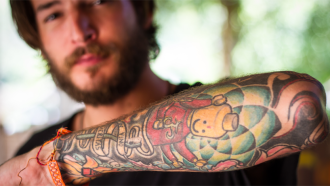
Tattoos: The good, the bad and the bumpy
Tattoos and their inks can cause regrets and allergic reactions. But here’s a surprise: Some inked body art may actually benefit health by boosting its host’s immune system.
- Brain
Noticing mistakes boosts learning
People who pay attention to their mistakes are more likely to do better the next time, data show.
- Brain
Teens make riskier decisions than children or adults
Teens may make risky decisions in part because they don’t care about uncertainty.
- Health & Medicine
Violence spreads like a virus
New research shows that the friends of violent teens are much more likely to become violent themselves.
- Brain
What makes a pretty face?
Beautiful faces are symmetrical and average. Do we prefer them because this makes them easier for our brains to process?
- Health & Medicine
What is IQ — and how much does it matter?
Studies reveal that intelligence — and success in life — depend on more than what IQ tests measure.
- Computing
Self-designed tattoos are fashionable technology
Researchers have created do-it-yourself temporary tattoos. They’re a fashion-forward way to control electronic devices.
- Brain
This supplement makes calorie-rich foods less tempting
A supplement that contains the fatty acid propionate causes the brain to rate high-calorie foods less appealing.
- Health & Medicine
Blame your ‘environment’ for your taste in music
Some scientists had thought we are born with our musical tastes. But a new study finds that what the ear prefers depends on what we listened to as we were growing up.
- Brain
Small region of brain recognizes facial expressions
Scientists identify the brain region responsible for recognizing facial expressions in others. It helps us know whether others are happy or sad.
- Health & Medicine
Teachers make time for Ebola and other current events
Science teachers want to cover current science and health topics, but struggle to find good resources for their students.
- Tech
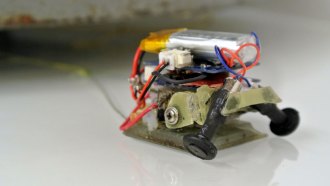
Tiny microrobots team up and move full-size car
Researchers have just created robots that mimic the ability of ants to move super-large objects.