All Stories by Maria Temming
- Animals
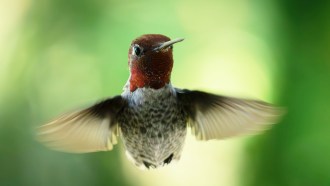
See how hummingbirds sneak through small spaces
Anna’s hummingbirds can use a couple of different techniques to get through gaps smaller than their wingspan.
- Animals
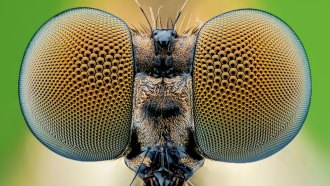
Scientists Say: Compound Eye
Compound eyes made up of many smaller visual structures may not produce crisp images, but they offer a great field of view.
- Physics
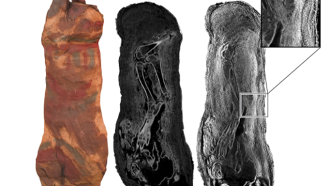
Let’s learn about particles that help us peer inside objects
Particles such as muons, X-rays and neutrons help scientists peer inside fossils, mummies, pyramids, volcanoes and the human body.
- Genetics
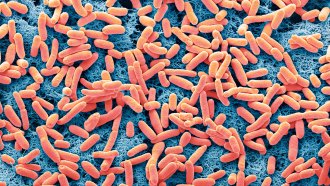
Scientists Say: Genetic Engineering
Genetic engineering involves adding, changing or removing certain pieces of DNA from a living thing to give it desired traits.
- Artificial Intelligence
Here’s why AI like ChatGPT probably won’t reach humanlike understanding
Unlike people, this type of artificial intelligence isn’t good at learning concepts that it can apply to new situations.
- Humans
Let’s learn about fingerprints
Researchers are still making new discoveries about how our fingerprints form — and how to use them to solve crimes.
- Animals
Let’s learn about animals’ bizarre sleep schedules
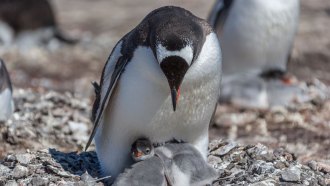
From reindeer that snooze while chewing to penguins that take thousands of naps each day, the animal kingdom has some truly weird sleep patterns.
- Space
Scientists Say: Corona
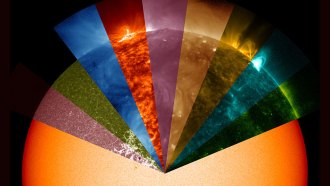
The sun’s corona can only be seen without special instruments during a total solar eclipse.
- Animals
Let’s learn about Godzilla and King Kong
These blockbuster monsters are too big to exist. But if they were real, what adaptations would each bring to battle?
- Animals
Scientists Say: Megalodon
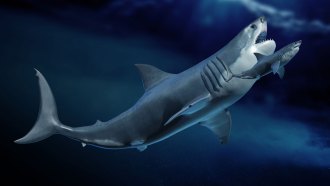
The extinct megalodon (Otodus megalodon) was the largest shark to ever prowl the oceans.
- Earth
Explainer: Sprites, jets, ELVES and other storm-powered lights
Fleeting glows collectively known as “transient luminous events” flash in the skies above powerful lightning storms.
- Health & Medicine
Family, friends and community inspired these high school scientists
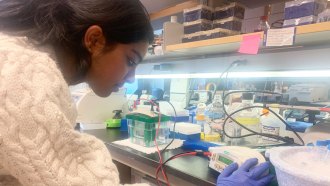
When looking for research ideas, listen to the people around you. What problems are they facing? What could you do to help?