Questions for ‘Global coral die-offs signal Earth’s first climate tipping point’ 
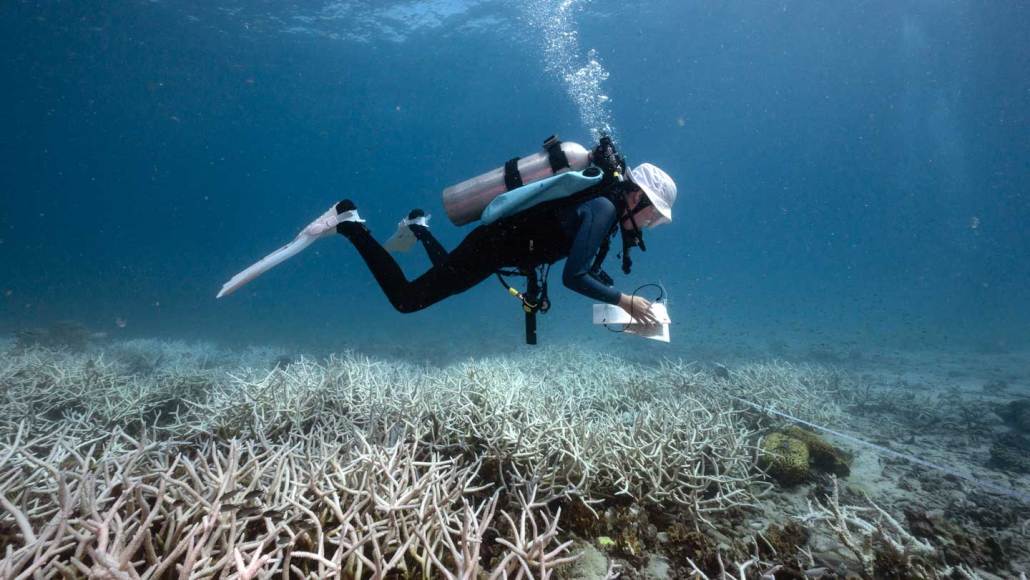
In this photo, a citizen scientist studies bleached corals off the coast of Thailand in June 2024. Marine heat waves devastated 80 percent of the world's warm water coral reefs in 2024. Projections for warming by 2030 suggest the world's corals are past their tipping point.

Near southern Thailand, a citizen scientist surveys bleached corals on June 14, 2024. Marine heat waves last year triggered the worst bleaching and coral die-off on record. It’s a point-of-no-return for coral reefs, researchers say, and shows Earth has passed its first climate tipping point.

LILLIAN SUWANRUMPHA/Contributor/Getty Images

To accompany Global coral die-offs signal Earth’s first climate tipping point

SCIENCE

Before Reading:

  1. Describe what a coral reef looks like, either from personal experience or from films or media. If coral reefs were lost, what is one way that this loss would affect you as an individual?
  2. What is a “tipping point”? If you describe a change as a tipping point, how does that tipping point differ from typical changes? In the context of climate change, what do you think would be meant by a tipping point?

During Reading:

  1. What is the “least worrisome” projection of future ocean temperature changes, as described in this story?
  2. Even if this hopeful projection becomes reality — rather than one of the worse ones — what will be the likely fate of warm water corals?
  3. Give two examples of possible ecological tipping points besides coral reef die-offs.
  4. What is the AMOC? What would be a possible consequence of the AMOC shutting down?
  5. What did nations that signed the Paris Accord in 2015 pledge to do?
  6. Where was the 2025 United Nations Climate Change Conference (UNCCC) held? What is another threat to this location’s ecology besides climate change?
  7. What does it mean for a tipping point to be positive? Give two examples of positive tipping points.
  8. What is one example of a “quick action” recommended by the UNCCC report?
  9. Give two examples of “short-lived” pollutants.
  10. What is one thing that Manjana Milkoreit suggests an individual might do to help the problem?

After Reading:

  1. Describe the conditions by which the Amazon rainforest would reach its own tipping point, according to experts. Contrast the current state of Amazon with this tipping-point condition. In other words, how close are we to reaching this threshold? Is it likely, somewhat likely or unlikely that we will reach this point? Explain your answer.
  2. To what extent has your view of the climate change crisis changed by reading this story? Milkoreit says that nobody, not even decision-makers, wants to hear this “terrible news.” Even so, she emphasizes that it is important to “not look away.” What do you think she means by this? Consider the following questions. Why do you think some people, even those in positions of authority, might react by looking away rather than facing the problem? To what extent do you think this reaction undermines our efforts to address climate change? Answer these questions by either: 1) writing a social media-style post of a paragraph or two or 2) by recording a short social media-style video. Imagine you are speaking to someone who is ignoring this issue for the reasons you outlined above. Your goal: to encourage them to face the problem rather than look away.