Questions for ‘Rockin’ farm fields suck up tons of CO2

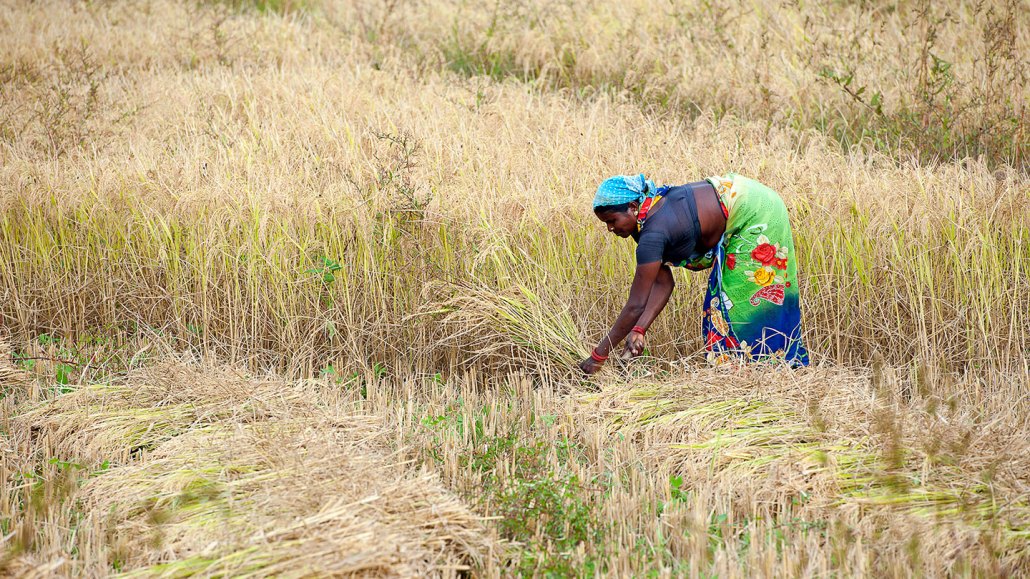
a woman bends over to harvest rice in a rice paddy, she is wearing brightly colored clothes and has dark skin.

A woman harvests rice in a village in the Indian state of Madhya Pradesh. Ongoing trials here and in nearby villages are testing the CO2-trapping promise of treating rice fields with crushed basalt, a common rock.

pilesasmiles/iStock Unreleased/Getty Images Plus

To accompany Rockin’ farm fields suck up tons of CO2

SCIENCE

Before Reading:

  1. Consider different types of materials — gases, solids and liquids — that might contain carbon. Identify one form of carbon that is implicated in causing climate change. What state of matter is this form of carbon? Identify one carbon-containing material that is not implicated in climate change, to the best of your understanding. What state of matter is this material?
  2. Do you think the climate change problem is a serious, moderately serious or trivial problem? Briefly explain your answer.

During Reading:

  1. List three nutrients released by basalt dust when it breaks down.
  2. What does ERW stand for?
  3. Besides increased crop production, what are two other benefits of adding crushed basalt to the soil?
  4. Explain why researchers say that large-scale ERW operations would also “bring big costs.”
  5. What is slag, and where might you find it?
  6. Summarize Arca’s approach toward carbon capture and removal.
  7. Mineral-rich industrial waste sometimes contains toxic metals. List two. How does the presence of these metals limit the ways the material can be used?
  8. According to estimates described in this story, how many metric tons of carbon dioxide would 2 hectares (about 5 acres) of miscanthus trap in one year?
  9. Approximately what percent of greenhouse gas emissions in the United States come from crops and livestock?
  10. Describe how summer rains in central India have changed over the past 75 years.
  11. Review the ERW trials conducted near Sarekha Khurd. To what extent does this technique offer a financial incentive to farmers?

After Reading:

  1. Review how carbon capture by basalt works at the chemical level. Sketch a picture of how cliffs containing basalt might be crisscrossed with white stripes. Point out the parts of your sketch that contain high amounts of calcium and magnesium. Then note the role of rainwater in the carbon capture process and include it in your sketch. Be sure to depict how carbon dissolved in water might be transformed in a way that helps the climate.
  2. Imagine you are part of a team trying to encourage widespread ERW within your region. Create a social media post that your organization might use to achieve three goals. With your post, you want to (1) introduce the public to the idea of ERW, (2) explain the value of this approach in a simple way and (3) provide the public with a “call to action” — that is, suggest an action that an individual might take to support your cause. Your post can contain an image (such as the picture you drew in Question 1 of After Reading, if relevant) or be text-only, your choice.