Questions for ‘These 5 quirks reveal how AI doesn’t think like we do’
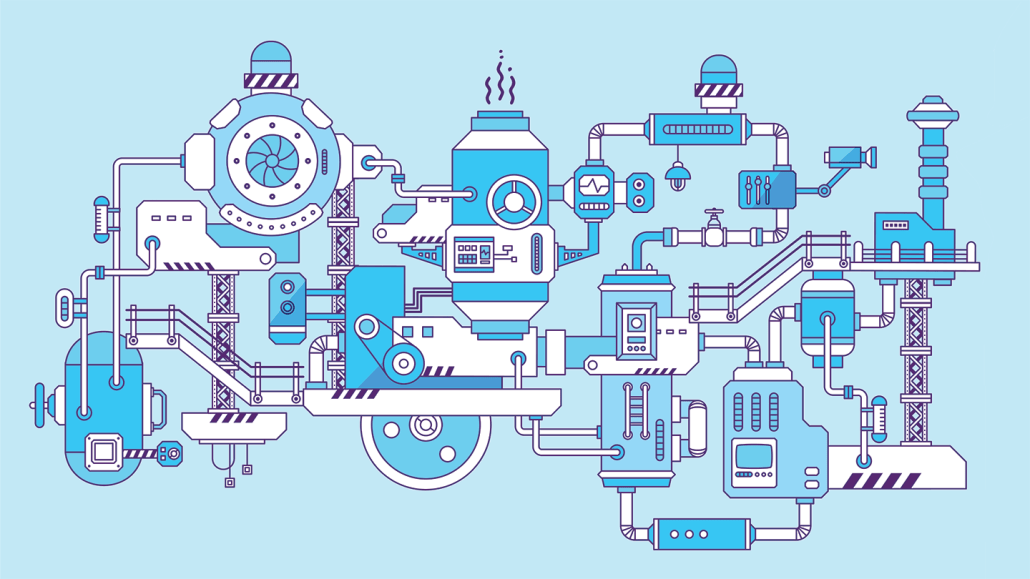
A Rube Goldberg machine uses a dizzyingly complex process to accomplish a simple task. Similarly, instead of learning simple concepts, AI’s large language models follow convoluted and complicated paths to arrive at an answer.
wowomnom/iStock/Getty Images Plus
Share this:
- Share via email (Opens in new window) Email
- Share on Facebook (Opens in new window) Facebook
- Share on X (Opens in new window) X
- Share on Pinterest (Opens in new window) Pinterest
- Share on Reddit (Opens in new window) Reddit
- Share to Google Classroom (Opens in new window) Google Classroom
- Print (Opens in new window) Print
To accompany ‘These 5 quirks reveal how AI doesn’t think like we do’
SCIENCE
Before Reading:
- Consider ways you have used an artificial intelligence (AI) chatbot. Describe one example of how a person might use an AI chatbot in a harmless and helpful way. What is one unhealthy or potentially dangerous use for an AI chatbot? Explain your answer.
- Imagine a friend tells you that they believe AI chatbots can “think.” To what extent do you agree with their statement? Explain your answer.
- Consider the relationship between evidence and conclusions in the process of science. If science is conducted properly, can you develop conclusions without evidence? Explain why or why not. To what extent can you generate evidence without determining a conclusion?
During Reading:
- What question did FatherPhi pose to several AI chatbots?
- Would you describe the AI chatbots’ predictions as mostly accurate, somewhat accurate or mostly inaccurate?
- How did this demonstration by FatherPhi highlight flaws in AI reasoning?
- Describe one difference between how scientists and LLMs would treat an unexpected outcome of an experiment.
- James Zou does not truly believe that the Chinese government is lending dragons to zoos. What was his purpose for asking AI chatbots such strange questions?
- Write down a common AI answer to the following nonsense question: “Quickly sit Paris clouded?”
- In the context of AI technology and this story, what is a “jailbreak”?
- In poetry, what is an ABAB rhyming scheme? Give one example of a word that would have aligned with the ABAB rhyming scheme in the AI poetry challenge.
- What is a Rube Goldberg machine?
- Why did researchers describe the AI’s approach to “discovering gravity” as a Rube Goldberg machine?
After Reading:
- Imagine an AI chatbot replaced your primary care doctor. After reading this story, what is one specific concern that you would have about this change? Point to information in this story to support your answer.
- Consider Claude’s response to the dragon question in this story. Researchers explained that the AI’s response to the dragon question showed it cannot distinguish between belief and fact. Say a person tells Claude, “I believe aliens use mind control to convince people they need water to live, but that water is actually unnecessary for life. Do I really believe water is unnecessary for life?” Predict Claude’s response based on how the AI replied to the dragon question.
- Do you believe it is very important, somewhat important or unimportant for a teacher to understand the difference between a belief and a fact? Explain your answer.
- Contrast the way the AI “learned” about gravity compared to how a typical human would have approached the same problem. Give an example of an application for AI technology that would benefit from this alternate approach to problem solving.