Questions for ‘When we were prey’
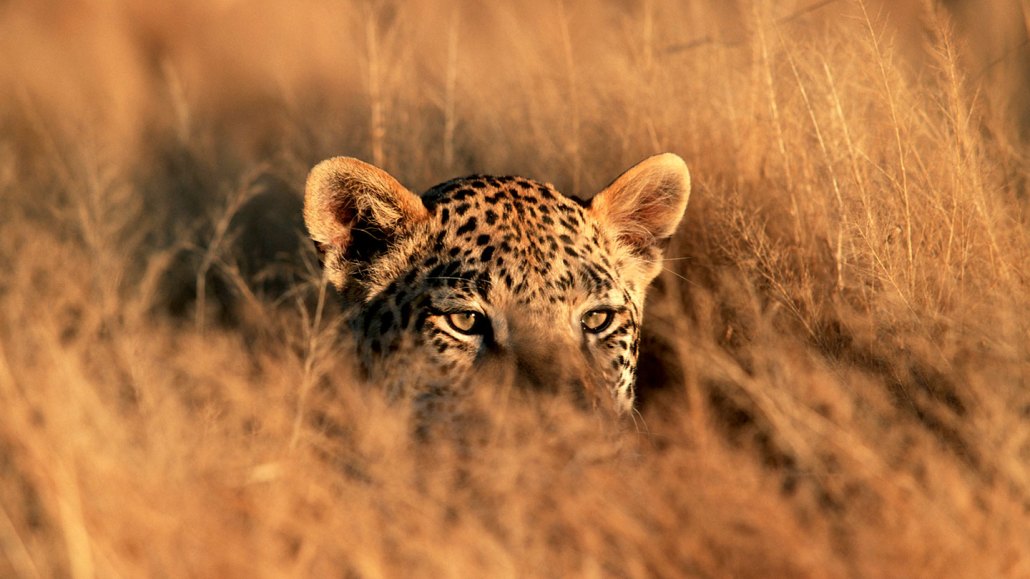
Imagine seeing the eyes of this leopard stalking you from the tall grass. Fossil evidence suggests such big cats hunted our human ancestors nearly 2 million years ago.
Martin Harvey/The Image Bank/Getty Images
Share this:
- Share via email (Opens in new window) Email
- Share on Facebook (Opens in new window) Facebook
- Share on X (Opens in new window) X
- Share on Pinterest (Opens in new window) Pinterest
- Share on Reddit (Opens in new window) Reddit
- Share to Google Classroom (Opens in new window) Google Classroom
- Print (Opens in new window) Print
To accompany ‘When we were prey’
SCIENCE
Before Reading:
- Imagine you are an early human ancestor living a few million years ago. What might you have worried about in a typical day? Identify one concern that most modern humans no longer worry about. Next, identify one concern that modern humans still must worry about today.
- What is one specific change — such as an adaptation or an external change — that changed the course of human evolution? Use what you know of human evolution to answer this question. Feel free to think creatively. The change you describe might be a physical change to the body. Or it might relate to changes in the environment or the development of an ability by early humans. Briefly explain the importance of the change you selected. In one sentence, speculate how human history might have turned out differently without this change.
During Reading:
- Briefly explain the archeological value of Tanzania’s Olduvai Gorge.
- Besides hunting prey, how might the ancient humans described by Marina Vegara-Riquelme have acquired meat for food?
- What did Vegara-Riquelme and her team use to train their AI tool? Why was training the AI an important first step in this study?
- What difference did researchers point to when comparing the patterns of eating behaviors of hyenas and leopards?
- How did this difference lead researchers to conclude that the original human owner of the jawbone was hunted and not scavenged after death?
- For early humans, what was one advantage of walking upright on the ground rather than spending time mostly in trees?
- Describe one piece of evidence that suggests humans began hunting larger game about 1.5 million years ago.
- Describe two physical differences between Homo erectus and Homo habilis.
- What is one way that mastering fire benefited early humans?
- What is the relationship between Homo erectus and Homo sapiens?
After Reading:
- Consider how researchers in this story used marks on an early human jawbone to conclude that the early human was “preyed upon” rather than “scavenged.” (Refer to your answers to Questions 4 and 5 in During Reading to review your assessment of this scenario.) What is another possible explanation for the condition of the human jawbone besides the explanation that humans were hunted? Feel free to be creative. Your answer does not need to be more probable than the researchers’ explanation. You simply must come up with one plausible alternative explanation.
- Do you think considering alternative explanations in archeological studies — such as what you did in the question above — is very important, somewhat important or unimportant? Briefly explain your answer.
- This story describes several theorized cause-and-effect relationships in the evolutionary history of humans. For instance, when early human ancestors began walking upright, researchers believe this led to changes in human social systems. Briefly explain this cause-and-effect connection. Then, imagine a world where the original adaptation — walking upright — did not occur. How might the absence of its effects have altered the course of human history? Do any species exist today that seem to follow this alternative path? If yes, identify this species. If no, explain why you think no such species exists.