Biological Evolution: Unity and Diversity
- Climate
Concerns about Earth’s fever
Burning fossil fuels is causing the planet to heat up, causing weather patterns to change, sea levels to rise and diseases to spread.
- Genetics
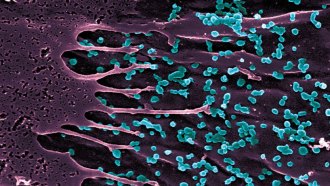
The earliest evidence of plague
Plague is best known as the killer disease that wiped out nearly half of Europe during the 1300s. But the germ infected people up to 3,000 years earlier than that, DNA from ancient teeth now show.
- Climate
Clues to the Great Dying
Millions of years ago, nearly all life on Earth vanished. Scientists are now starting to figure out what happened.
- Animals
Wolves beat dogs at problem-solving test
When treats are at stake, wolves outperformed dogs at opening a closed container. The dog’s relationship with humans may explain why.
- Animals
Chikungunya wings its way north — on mosquitoes
A mosquito-borne virus once found only in the tropics has adapted to survive in mosquitoes in cooler places, such as Europe and North America.
- Genetics
DNA: Our ancient ancestors had lots more
Ancestral humans and their extinct relatives had much more DNA than do people today, a new study finds. It mapped genetic differences over time among 125 different human groups.
- Health & Medicine
New ways to fight the flu
Influenza sickens millions each year. A worldwide epidemic could kill many of them. Fortunately, new ways to fight the flu offer hope — before it’s too late.
- Animals
The bugs within us
Hordes of bacteria live inside people and other animals. This ‘microbiome’ can affect the development of the blood-brain barrier, food choices — even mating.
- Animals
Picture This: The real ‘early bird’
Long before dinosaurs went extinct, birds were emerging on Earth. These hummingbird-size wading birds are the earliest known ancestors of today’s birds.
- Animals
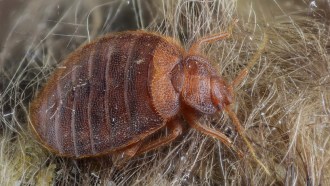
Return of the bed bug
Bed bugs have staged a comeback over the past 15 years. The bloodsucking parasites succeeded through a combination of evolution and luck.
- Animals
What’s the buzz? A new mosquito lure
Broadcasting a fake buzz can lure male Aedes aegypti mosquitoes away from females. That could reduce populations of these annoying — and disease-causing — insects, reports a teen at the 2015 Intel ISEF competition.
- Fossils
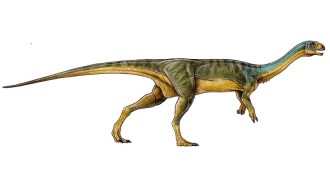
‘Frankenstein’ dino showed a mashup of traits
New species unearthed in Chile is “an anatomical Frankenstein,” declares one of its discoverers.