Biological Evolution: Unity and Diversity
- Archaeology
Neandertals were a lot like our human ancestors
From toolmaking to healthcare, new research finds that Neandertals shared many cultural and social similarities with our human ancestors.
- Environment
Microplastic pollution aids viruses and prolongs their infectivity
The tiny plastic bits give these germs safe havens. That protection seems to increase as the plastic ages and breaks into ever smaller pieces.
- Fossils
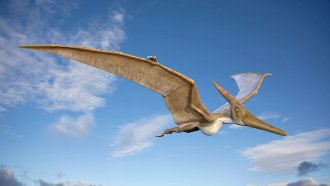
Let’s learn about pterosaurs
These ancient flying reptiles were not dinosaurs, but they were close relatives.
- Animals
Some young fruit flies’ eyeballs literally pop out of their heads
The first published photo shoot of developing Pelmatops flies shows how their eyes rise on gangly stalks in the first hour of adulthood.
- Animals
Cougars pushed out by wildfires took more risks around roads
After an intense burn in 2018 in California, big cats in the region crossed roads more often. That put them at higher risk of becoming roadkill.
- Fossils
Sprinting reptiles may have been forerunners of soaring pterosaurs
A new analysis of an old fossil supports the idea that winged pterosaurs evolved from swift and tiny two-legged ancestors.
- Health & Medicine
Should we use a genetic weapon against mosquitoes carrying malaria?
One gene drive to eliminate malaria seems to work in the lab. Now it’s time to ask local people if they want it released in the wild.
- Animals
Sea creatures’ fishy scent protects them from deep-sea high pressures
TMAO’s water-wrangling ability protects a critter’s critical proteins — including muscle — from crushing under deep ocean pressures.
- Genetics
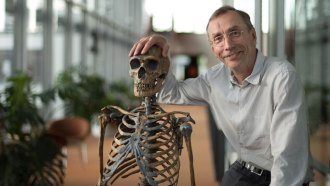
Examining Neandertal and Denisovan DNA wins a 2022 Nobel Prize
Svante Pääbo figured out how to examine the genetic material from these hominid ‘cousins’ of modern humans.
- Animals
Living mysteries: This critter has 38 times more DNA than you do
The genomes of salamanders are bloated with genetic “parasites.” That extra DNA slows down their lives and strands them in perpetual childhood.
- Animals
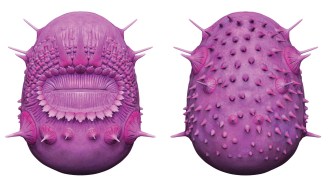
Bizarre ancient critter has spines but no anus
The spiny discovery moves this minion lookalike off a distant limb on the human family tree.
- Earth
Not one, but two asteroids might have ended the age of dinosaurs
A craterlike structure found off the coast of West Africa might have been formed by an asteroid that struck around the time dinosaurs went extinct.