Biological Evolution: Unity and Diversity
- Life
Scientists Say: Ichnology
This field of science looks to understand life — past and present — by studying how organisms altered their surroundings.
- Animals
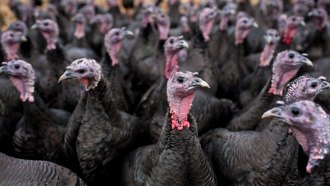
Let’s learn about why turkeys are dinosaurs
Modern birds are the only dinosaurs that survived an apocalyptic extinction event 66 million years ago.
- Humans
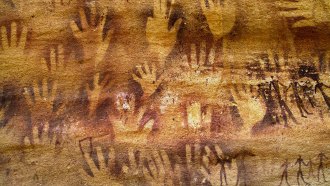
Scientists Say: Prehistoric
Researchers rely on prehistoric tools and other artifacts to study the vast stretches of time before recorded history.
- Math
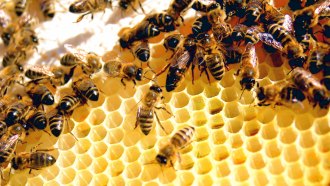
Bees and wasps devised the same clever math trick to build nests
During nest building, these insects add five- and seven-sided cells in pairs. This helps their colony fit together hexagonal cells of different sizes.
- Oceans
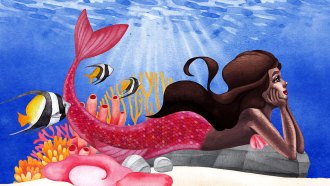
How would a mermaid sound underwater?
Human ears don’t work well in the water. A mermaid would need marine creature features to talk to and understand her aquatic friends.
- Fossils
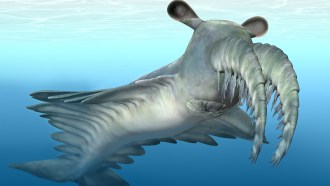
This bizarre ancient predator snagged soft prey
Scientists are rethinking how this extinct creature used the spiky limbs sticking out of its face to hunt.
- Animals
Megalodons may have become megahunters by running hot
O. megalodon sharks were warm-blooded mega-predators. But when food sources dwindled, colder-blooded sharks may have had an evolutionary edge.
- Animals
Explainer: What is animal domestication?
The difference between a dog and a wolf isn’t looks or genes or even behavior. It’s the relationship these animals have with people.
- Fossils
T. rex may have hidden its teeth behind lips
Dinosaurs like Tyrannosaurus have long been portrayed with their big teeth bared. But new research suggests this wasn’t so.
- Fossils
Ancient jellyfish? Upside down this one looks like something else
A new look at an ancient sea animal called Essexella suggests it may have been a type of burrowing sea anemone, not a floating jelly.
- Health & Medicine
New patch might replace some finger-prick testing of blood sugar
A finalist at Regeneron ISEF created a wearable patch that turns yellow when someone’s blood-sugar level gets high enough to need an insulin shot.
- Animals
Pokémon ‘evolution’ looks more like metamorphosis
Pokémon “evolve” into larger, more powerful forms within seconds, but this evolution more closely resembles another biological process — metamorphosis.