Biological Evolution: Unity and Diversity
- Archaeology
Bright-colored feathers may have topped pterosaurs’ heads
Fossil remains of a flying reptile hint that their vibrant crests may have originated 250 million years ago in a common ancestor with dinosaurs.
- Archaeology
Scientists Say: Denisovan
The Denisovans were a recently discovered population of ancient hominids.
- Earth
Cool Jobs: Bringing paleontology to the people
From museums to movies, these three paleontologists totally rock their connections with the public.
- Animals
A dog’s breed doesn’t say much about its behavior
Many people associate dog breeds with specific behavioral traits. But breed appears to account for only about 9 percent of behavioral differences.
- Animals
Scientists Say: Primate
Primates are mammals that tend to have big brains, forward-facing vision, fingernails and flexible hands and feet.
- Animals
Smartphones can now bring Ice Age animals back to ‘life’
Scientists bring Ice Age creatures to life with augmented reality. You can view these creatures in your own world on a smartphone.
- Animals
Losing some genes may explain how vampire bats can live on blood
Loss of 13 genes active in other bats could support the vampires’ blood-eating strategies and adaptations.
- Animals
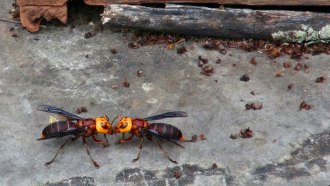
The scent of queen ‘murder hornets’ can lure males into traps
Traps baited with compounds found in the mating pheromone of hornet queens attracted thousands of males.
- Animals
Surprise! Sixteen tiny wasp species found masquerading as one
Scientists used new and old tools to overturn 160-year-old ideas about this wasp. They show you can’t tell a wasp by its looks.
- Animals
One of the earliest meat-eating mammals was saber-toothed
Millions of years before the evolution of saber-toothed cats, a newly discovered "hypercarnivore" prowled the forests of what is now San Diego.
- Health & Medicine
Sickle-cell gene therapies offer hope — and challenges
Doctor Erica Esrick discusses existing treatments and an ongoing clinical trial for a gene therapy to treat sickle cell disease.
- Animals
The end of the dinosaurs appears to have come in springtime
Fish fossils from North Dakota suggest when the Chicxulub asteroid devastated Earth, triggering the mass extinction of dinosaurs and other species.