Earth's Place in the Universe
- Space
Huge arc of galaxies is surprising and puzzling cosmologists
The arc appears to violate a cosmic rule that on such large scales, matter will be evenly distributed.
- Space
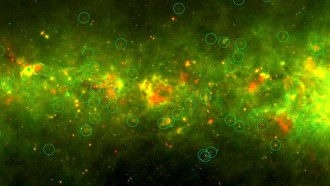
The Milky Way’s ‘yellowballs’ are clusters of baby stars
The mysterious cosmic objects — first spotted by citizen scientists — turn out to be infant stars of various masses.
- Climate
Climate may have sent drift of the North Pole toward Greenland
This mid-1990s shift in the pole’s movement was driven by glacial melt. And that was triggered in part by climate change, a new study reports.
- Physics
Stars made of antimatter could lurk in our galaxy
Fourteen sources of gamma rays in our galaxy look like they could be antistars — celestial bodies made of antimatter.
- Physics
The pebbled path to planets
Small pebbles zipping through a sea of gas may give rise to mighty planets.
- Physics
Staying grounded in space requires artificial gravity
On TV, people in space walk around like they’re on Earth. How can science give real astronauts artificial gravity? Spin right round, baby.
- Physics
Scientists discover likely source of the moon’s faint yellow tail
These sodium atoms are part of the debris kicked up from the moon’s surface, mostly by micrometeorites, two new studies conclude.
- Science & Society
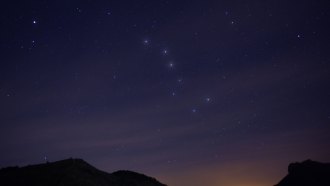
Here’s why people picked certain stars as constellations
Patterns of human eye movement help explain why particular sets of stars form iconic shapes, a high school student showed.
- Fossils
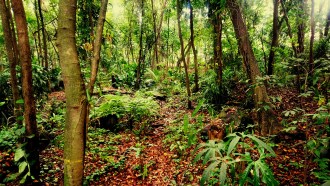
Dinosaur-killing asteroid radically changed Earth’s tropical forests
The asteroid collision initially reduced the diversity in what had been sunny tropical rainforests. In time, the forests would become permanently darker.
- Space
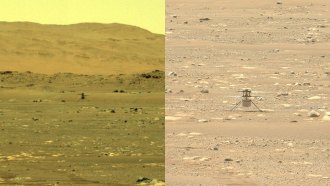
Ingenuity helicopter makes history by flying on Mars
The copter's 40-second-long flight in the Red Planet’s thin air is only the first in a planned series of daring flights.
- Planets
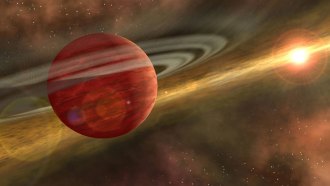
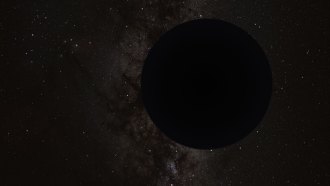
Signs of a hidden Planet Nine in our solar system may be an illusion
Hints of the remote planet, also called Planet X, relied on clumped up orbits of bodies beyond Neptune. A new study suggests that clumping doesn’t exist.
- Planets
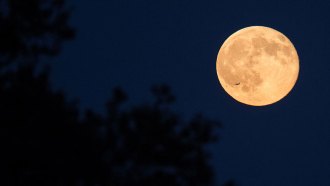
Let’s learn about the moon
The moon is Earth’s nearest neighbor, and its gravity helps stabilize the planet’s climate and creates the tides.