Ecosystems: Interactions, Energy, and Dynamics
- Animals
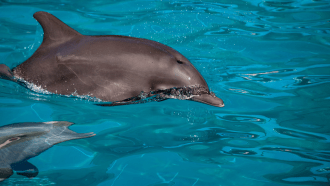
Drones might one day capture a dolphin’s breath in midair
High-speed footage of dolphin spray reveals that droplets blast upward at speeds close to 100 kilometers per hour.
- Health & Medicine
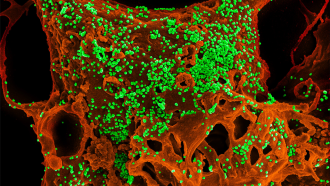
Your most urgent questions about the new coronavirus
Researchers have more questions than answers right now about 2019-nCoV. They’re racing to understand and stop the coronavirus and the health crisis it poses.
- Chemistry
Help for a world drowning in microplastics
Microplastic pollution in our oceans and lakes is a problem. Scientists are testing solutions — from more biodegradable recipes to nanotechnology.
- Health & Medicine
The many challenges of corralling a coronavirus outbreak
The Chinese government has quarantined millions of people in hopes of limiting spread of a new coronavirus. But no one yet knows how much this will help.
- Animals
Healthy coral reef sounds attract fish searching for a home
Playing the sounds of a healthy reef can help attract fish to dying corals, helping rebuild their community.
- Earth
Newfound desert soil community lives on sips of fog
Lichens and other fungi and algae team up to form a 'grit-crust' on the parched soil of Chile’s Atacama Desert. Those species slake their thirst with moisture from coastal fog.
- Health & Medicine
Explainer: What is a coronavirus?
Coronaviruses are a diverse family of disease-causing agents. Some cause the common cold. Newer ones have emerged to pose more serious threats to people.
- Genetics
Serious virus emerges in China and is spreading globally
A new viral infection emerged in December 2019 among people in Wuhan, China. The mystery illness has already killed at least 17 people and sickened many hundreds.
- Animals
Australian fires have imperiled up to 100 species
As massive wildfires consume huge swaths of Australia’s bush, untold species — many of them found nowhere else — are now threatened with extinction.
- Animals
Why some whales become giants and others are only big
Being big helps whales access more food. But just how big a whale can get is influenced by whether it hunts or filter-feeds.
- Brain
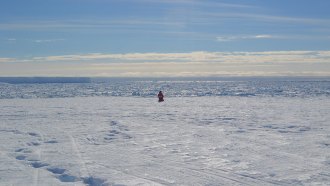
Scientists’ brains shrank after a long stay in Antarctica
The isolation of a long-term mission at an Antarctic research station shrunk part of crew members’ brains, a small study suggests.
- Health & Medicine
Globetrotting microbes in airplane sewage may spread antibiotic resistance
Along with harder-to-kill microbes, airplane sewage contains a diverse set of the genes that let bacteria evade antibiotics.