Engineering Design
- Physics
Physics guides teen in search for which bike tire is best
Mountain bikes have lots of options, including the size of the wheels. The choice a rider makes when buying a bike can affect how fast they can go.
- Health & Medicine
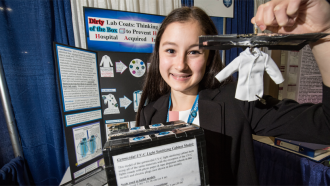
A light-filled box could blast bacteria from lab coats
Doctors can pick up bacteria on their lab coats. A teen has designed a special light-filled box to keep those coats from infecting others with those germs.
- Materials Science
Teen’s invention could help light up bikes at night
A teen researcher from Georgia has developed a light that could replace reflectors on bike wheels. Flexing tires provide all the power it needs.
- Health & Medicine
This mix turns pink when sunscreen wears thin
Many people know to put on sunscreen. Remembering to put more on is harder. A teen invented an indicator that glows pink when it’s time to reapply.
- Microbes
Tweaked germs glow to pinpoint buried landmines
Finding landmines could become much safer with a new technology. It uses genetically modified bacteria that glow under laser light.
- Tech
Teens garner some $4 million in prizes at 2017 Intel ISEF
Hundreds of teens collectively took home about $4 million in awards from the Intel International Science and Engineering Fair this week.
- Materials Science
A better way to stop a bullet?
A teen researcher's tests suggest that fabric body armor might stop bullets better if it were woven using a three-fiber, triangular mesh instead of the typical two-fiber-mesh configuration.
- Oceans
Teen’s invention can warn of deadly rip currents
A teen lifeguard from Australia has invented a buoy that can alert swimmers to the strong, swift and deadly rip currents that can sweep them dangerously far offshore.
- Computing
Teaching robots right from wrong
Robots of the future will face tricky dilemmas. Researchers are working on tools to help robots make the right choices and keep people safe.
- Earth
How Earth got its moon
How did our moon form? Scientists are still debating the answer. It may be the result of some one big impact with Earth — or perhaps many small ones.
- Life
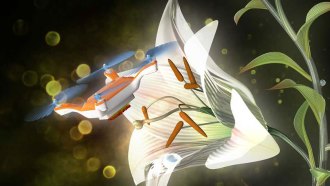
Fleets of flying robots could pollinate crops
Tiny flying drones use patches of sticky hair to capture pollen. One day they might join bees in pollinating crops.
- Physics
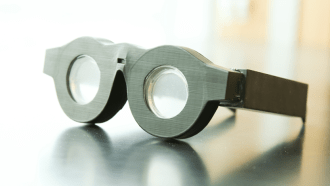
Auto-focus eyeglasses rely on liquid lenses
Engineers have designed what could be the last eyeglasses anyone would need. Right now, they’re bulky but smart. Liquid lenses are key to their adjustability — and those lenses focus automatically.