Engineering Design
- Earth
Keeping space missions from infecting Earth and other worlds
Scientists are always looking for ways to stop Earthly microbes from polluting other planets. The same goes for bringing bits of other planets back to Earth.
- Environment
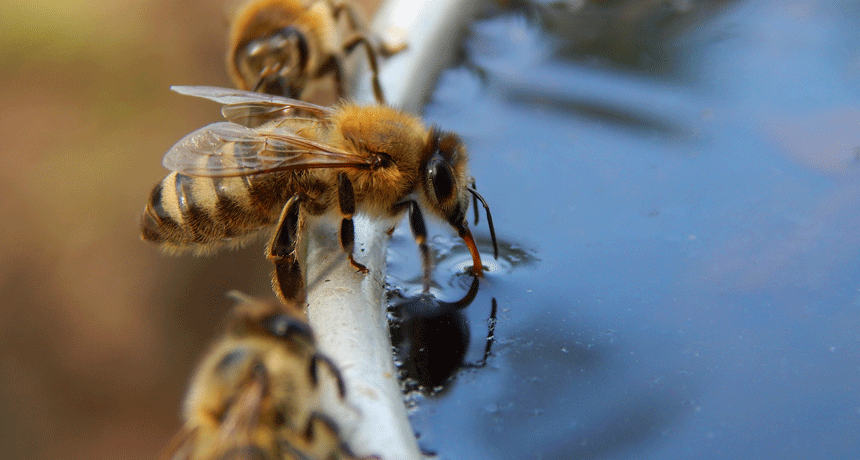
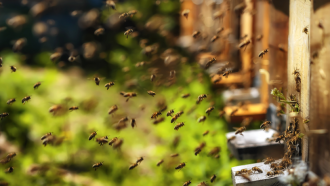
Cleaning up water that bees like to drink
Plant roots suck up pesticides used on soils, then release them into water that can seep from their leaves. This is a sweetened water that bees love to sip. A teen figured out how to remove most of the pesticide with bits of charcoal.
- Science & Society
Should we call out to space aliens?
Scientists have been listening to space for decades, hoping to pick up alien signals. Now some have proposed we try broadcasting a welcome call.
- Animals
Frog’s gift of grab comes from saliva and squishy tissue
What puts the grip in a frog’s high-speed strike? Quick-change saliva and a super-soft tongue, scientists find.
- Physics
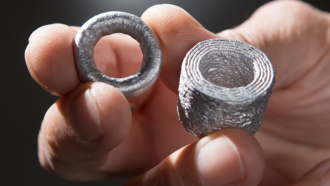
Father and son harness magnetic fields for new type of 3-D printing
A dad and his son have developed a new 3-D printing method in their basement. It harnesses pulsed magnetic fields to build metal objects one tiny aluminum drop at a time.
- Animals
Cool Jobs: A world aglow
Three scientists probe how the natural world makes light, in hopes of using this information to design new and better products.
- Microbes
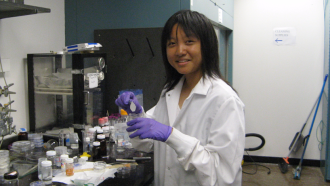
Teen invents a dip to keep germs away
A teen competing in the 2017 Regeneron Science Talent Search invented an eco-friendly chemical mix. It should keep bacteria from growing on treated paper, fabrics — including wound coverings — and more.
- Tech
Scientists turn toy into valuable tool for medical diagnosis
A human-powered ‘paperfuge,’ inspired by a toy, could serve as an easy, low-cost way to aid in medical diagnoses, even in regions of the world lacking access to electricity.
- Health & Medicine
Jiggly gelatin: Good workout snack for athletes?
Eating a vitamin-rich, Jell-O-like snack could help the body make the collagen needed to repair bones and ligaments that can be damaged by exercise.
- Computing
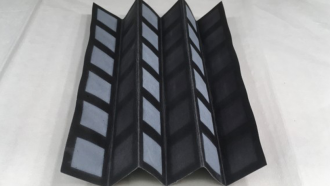
Germs power new paper batteries
New paper-based batteries rely on bacteria to generate electricity. These ‘papertronic’ power systems may be a safer choice for remote sites or dangerous environments.
- Animals
Cool Jobs: Abuzz for bees
These scientists are keeping bees healthy, making medicines for people from honey and constructing bee-inspired robots.
- Archaeology
Space archaeologists need your help to protect ancient treasures
Explorers who search for ancient ruins in satellite images are asking for help from the public. Volunteers can visit a new website to sign up.