MS-ESS1-3
Analyze and interpret data to determine scale properties of objects in the solar system.
- Planets
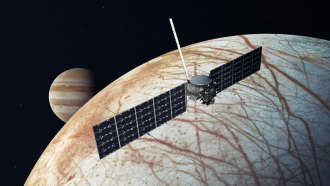
So many wondrous moons — just a spaceship ride away
Scientists are studying extraterrestrial moons for clues to how planets form, how life began — and whether there’s life out there right now.
- Space
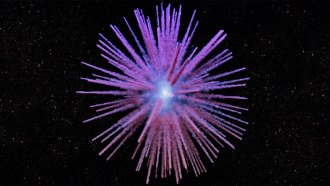
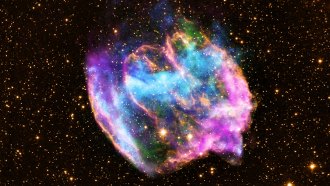
This zombie star’s spiky filaments are baffling astronomers
The star's odd tendrils were somehow formed by a supernova that skywatchers saw way back in 1181.
- Planets
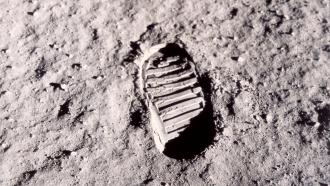
Scientists Say: Regolith
This sandlike dust blankets planets, asteroids and other rocky surfaces of our solar system, including our own planet.
- Space
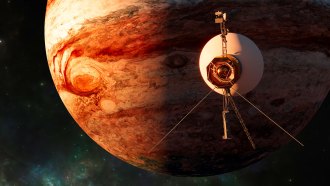
The biggest discoveries of Voyagers — NASA’s most distant explorers
Voyager 1 and 2 left Earth in 1977 to fly by the outer planets. Nearly 50 years later, these spacecraft are still transforming our knowledge of space.
- Space
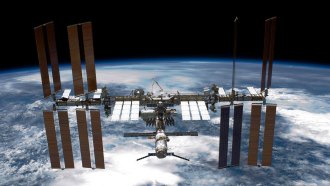
Let’s learn about the International Space Station
Astronauts on the space station have gathered data on everything from climate change to dark matter.
- Planets
A peek into a stellar nursery has revealed six baby giant worlds
Images of six Jupiter-sized worlds taken by the James Webb Space Telescope offer clues to how planets and stars form.
- Space
Let’s learn about supernovas
Supernovas are spectacular stellar explosions that sprinkle heavy elements throughout the universe.
- Earth
Scientists Say: Sundog
A sundog appears in the sky when sunlight shines through tiny ice crystals suspended in the air.
- Space
Microscopic black holes may be flying through our solar system
These flybys could jostle the orbits of planets and satellites as teeny black holes whiz by us once a decade or so.
- Space
The moon has new tales to share, some from its secretive far side
Ongoing observations and new lunar rock samples, including the first from its far side, should point to how both the moon and our Earth evolved.
- Planets
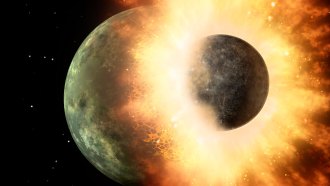
Scientists Say: Theia
Clues about this ancient protoplanet's catastrophic end may have been entombed in Earth's lower mantle for billions of years.
- Space
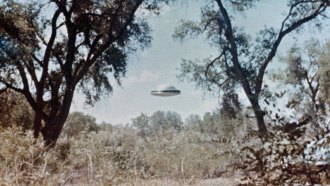
Why are scientists suddenly interested in UFOs?
For decades, science mostly ignored UFOs. Then in 2015 Navy pilots started reporting them. The U.S. government enlisted scientists to investigate.