U.S. sunscreen users are finally getting a new option
FDA has added bemotrizinol to the list of approved ingredients in U.S. sunscreens
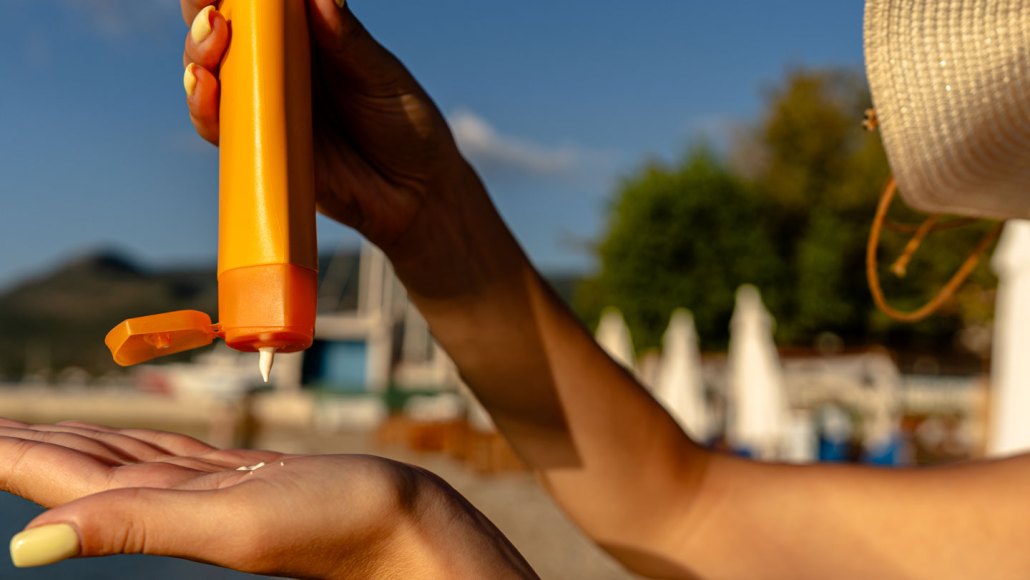
Attention sunbathers: There’s a new sunscreen ingredient in town. And it may be more effective than some of the current options.
ProfessionalStudioImages/E+/Getty Images
Share this:
- Share via email (Opens in new window) Email
- Share on Facebook (Opens in new window) Facebook
- Share on X (Opens in new window) X
- Share on Pinterest (Opens in new window) Pinterest
- Share on Reddit (Opens in new window) Reddit
- Share to Google Classroom (Opens in new window) Google Classroom
- Print (Opens in new window) Print
By Meghan Rosen
This is a human-written story voiced by AI. Got feedback? Take our survey . (See our AI policy here .)
Glowy oils, tinted creams, misty sprays, chalky sticks, lightweight gels. Like many people, my pool bag is filled with many types of sunscreen. But all use the same sun-shielding chemicals. In fact, the allowed ingredient list for U.S. sunscreens hasn’t changed in 20 years — until now.
This June, the U.S. Food and Drug Administration (FDA) added bemotrizinol (Beh-moh-TRIZ-eh-nol) to its approved list.
“I think we should all be super excited,” says Tanya Hathaway. She’s a dermatologist who specializes in treating high-risk skin-cancer patients. Hathaway works at the Fred Hutchinson Cancer Center in Seattle, Wash.
Bemotrizinol has many benefits. It lasts longer than other sunscreen ingredients. It won’t get quickly absorbed into the bloodstream. And it’s very good at blocking those rays of the sun that age skin.
Sunscreens in Europe have used the chemical for more than 25 years, Hathaway notes. More recently, it’s been approved in Japan, Canada, Australia and many other places.
There are some sunscreen ingredients used elsewhere that still are not allowed in U.S. products. Bemotrizinol’s approval could open U.S. doors for some of these. It’s “a great first step,” Hathaway says.
A new chemical sunscreen
Sunscreens use a few tricks to protect our skin from the sun’s rays. Physical sunscreens rely on minerals such as titanium dioxide and zinc oxide. These create a coating that reflects sunlight, like a mirror. But they can leave a white sheen on the skin. Just think of a lifeguard’s nose, says Jennifer Stein. She’s a dermatologist at NYU Langone Health in New York City.
Those zinc and titanium products also “don’t rub in so well,” she notes. “And if people don’t like the way their sunscreen smells or feels, they’re not going to use it.”
Do you have a science question? We can help!
Submit your question here, and we might answer it an upcoming issue of Science News Explores
Non-mineral sunscreens often rub in a bit better. They often use chemicals such as avobenzone (Ay-vah-BEN-zoan) and oxybenzone to absorb the sun’s rays. But these molecules are not very stable. They start to break down when hit by sunlight, Stein says. That’s not ideal for something that’s designed for use in the sun.
Because bemotrizinol is more stable, people may not need to apply sunscreens with it as often. This new ingredient also is good at blocking ultraviolet A1 (UVA1) radiation. That’s a type that gets deep into the skin. Over time, UVA1 can make skin wrinkly, loose and spotted, Hathaway says.
Current U.S. sunscreens do a good job of blocking UVB, which causes sunburns. But U.S. sunscreens had fewer options for blocking UVA, she says. Bemotrizinol “really expands that UVA spectrum of coverage.”
Is it safe?
You might have seen influencers on TikTok or Instagram making DIY sunscreens. Often, they will call the ingredients in commercial brands “toxic.” Sunscreen skepticism on social media is nothing new, Stein says. Patients who avoid sunscreen often worry about chemicals passing through the skin.
That can happen with things like avobenzone and oxybenzone. They may even get into your blood, Stein says — but only if “you apply them to large areas of the body repeatedly throughout the day.” Even so, people shouldn’t fear them. Hathaway says no studies have shown that U.S. sunscreen ingredients are unsafe when used at current levels.
Bemotrizinol, which is a big molecule, is less likely to pass through skin than these other chemicals. It’s “too big to squeeze through the skin cells to get down into your bloodstream,” Stein says.
FDA classifies bemotrizinol as GRASE (short for generally recognized as safe and effective). Titanium dioxide and zinc oxide are the only other U.S. sunscreen ingredients with this rating.
Bemotrizinol’s U.S. approval goes into effect on August 9. So sunscreens using it could hit shelves later this summer. But a new sunscreen is not the only way to stay safe from the sun. There are plenty of low-tech options, too: long sleeves, hats, sunglasses and staying in the shade. “The more clothing you’re wearing,” Stein emphasizes, “the less you have to depend on sunscreen.”