MS-LS2-2
Construct an explanation that predicts patterns of interactions among organisms across multiple ecosystems.
- Health & Medicine
Peanuts for baby: A way to avoid peanut allergy?
Making peanut products a baby food could head off life-threatening peanut allergies later, new data show.
- Health & Medicine
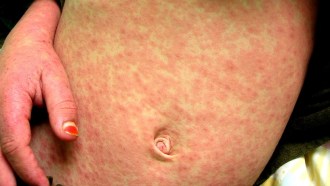
10 things to know about measles
Many people think that the measles vaccine wiped out the disease — at least in the United States. It hasn’t. And people who were never vaccinated face the primary risk of getting this very serious disease
- Health & Medicine
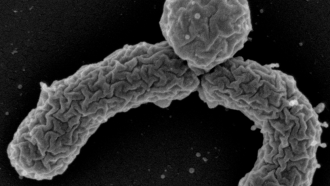
New germ fighter turns up in dirt
Scientists have found a compound in soil that can kill the microbes that cause anthrax, tuberculosis and other diseases.
- Life
Scientists say: Biomagnify
Chemicals in the environment can build up in an animal’s tissues. Predators who feed on these animals can accumulate more and more of the pollutants, a process known as biomagnification.
- Animals
Virus blamed in starfish die-off
A virus may explains the deaths of millions of starfish along the Pacific Coast of North America. The deaths affect 20 species. Some of the stricken animals appear to melt into puddles of slime.
- Genetics
How ‘bugs’ in our bellies impact our health
Gut bacteria can play a powerful role in human health, new studies show. In one, bacteria turned a nutrient in red meat into a chemical that boosts the risk of a heart attack. Another study shows that our genes play a role in whether we are fat or thin, probably by affecting which bacteria prefer to live in our intestines.
- Animals
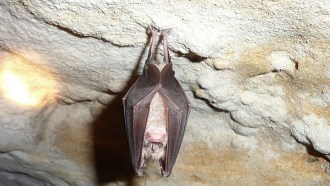
Scientists seek bat detectives
Bats emit high-pitched calls in the night to find their way around. A citizen science project is eavesdropping on these calls to probe the health of ecosystems.
- Genetics
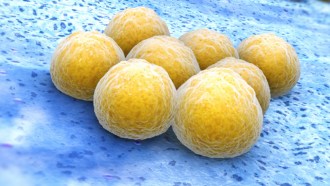
Germs help each other fend off antibiotics
Drug-resistant bacteria can cause persistent infections. A new study finds these germs fight drugs in different ways. And they can swap various compounds, increasing their neighbors’ chances of overcoming the drugs meant to kill them.
- Microbes
Recycling the dead
When things die, nature breaks them down through a process we know as rot. Without it, none of us would be here. Now, scientists are trying to better understand it so that they can use rot — preserving its role in feeding all living things.
- Health & Medicine
Ebola emerges in the Congo
The Democratic Republic of Congo (formerly Zaire) is where the Ebola virus was first discovered in 1976. This nation has just been hit again by the disease. Scientists suspect this is a new and independent outbreak — not a spread of the epidemic ravaging West Africa.
- Health & Medicine
Ebola treatments and vaccines could be near
Using experimental medicines against Ebola might help to slow or end an outbreak in Africa that has defied efforts to control it.
- Health & Medicine
Explainer: What is Ebola?
A virus is behind the hemorrhage-inducing infection called Ebola. It causes fevers and often intense bleeding — seemingly from anywhere and everywhere.