MS-LS2-3
Develop a model to describe the cycling of matter and flow of energy among living and nonliving parts of an ecosystem.
- Environment
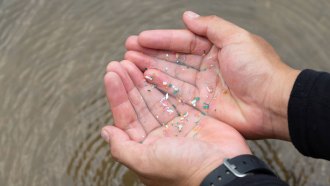
Sea life may suffer as plastic bits alter metals in water
This interplay between plastics and metals could affect how each affects the environment — and suggests opportunities for controlling their risks.
- Chemistry
Scientists Say: Rubisco
Rubisco is a key protein in the process of photosynthesis, which feeds plants — and, in turn, us.
- Environment
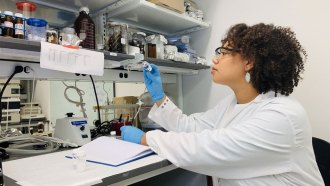
This chemist uses online videos to teach about the perils of microplastics
Imari Walker says her journey as a scientist and science communicator lets her talk about and advocate for her passion.
- Environment
Bacterial ‘living wires’ could help protect the seas and climate
Long, thin bacteria that conduct electricity may be able to help clean up oil spills and reduce emissions of methane, a powerful greenhouse gas.
- Humans
What does charred ancient poop reveal about early animal-raising?
Evidence from the dung may push the onset of animal raising back 2,000 years earlier than previously thought.
- Chemistry
No sun? No prob! A new process might soon grow plants in the dark
Teamwork makes green-work! Collaborating scientists came up with an electrifying farming trick that could make sunlight optional.
- Chemistry
Ponds made to control floods can spew climate-warming gases, study finds
Younger stormwater ponds can release more carbon in gases than they absorb, a study finds. That could aggravate global warming.
- Earth
Widely used pesticides may threaten Earth’s ozone layer
Data show a major class of long-used “eco-friendly” copper chemicals unexpectedly react with soil, making gases harmful to Earth’s protective ozone layer.
- Chemistry
Scientists Say: Decay
This word can refer to rotting flesh or the transformation of radioactive atoms.
- Ecosystems
Recycling a climate-warming gas could make ‘greener’ farmed fish
Instead of warming the climate, methane gas can be collected to help farmers. Along the way, it may also save some fish.
- Life
Scientists Say: Bacteria
Bacteria get a bad rap for making people sick, but only a tiny portion of these single-celled creatures cause disease.
- Life
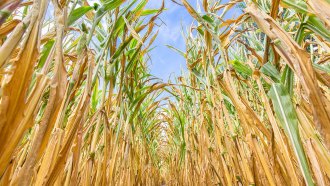
In blazing heat, some plants open leaf pores — and risk death
When heat waves and droughts collide, water is precious. Some thirsty plants try to cool off by opening tiny pores — only to lose water even faster.