Earth
- Earth
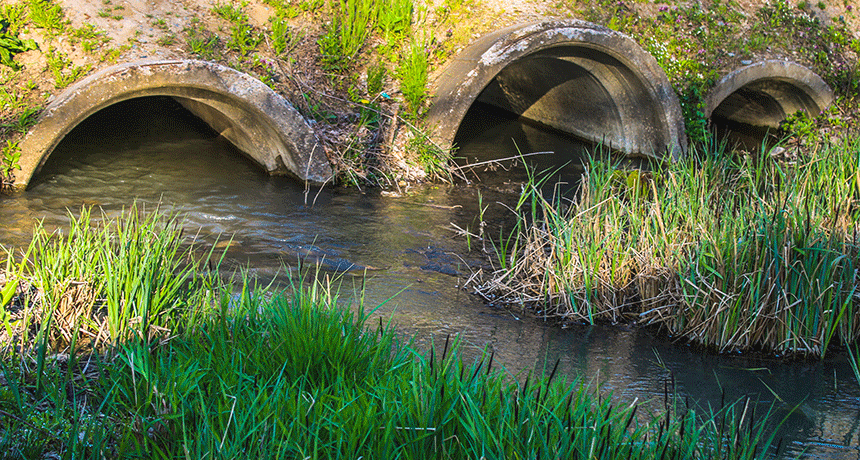
Scientists Say: Runoff
Water that flows through soil and into rivers, lakes and oceans becomes runoff. That runoff can carry part of the land — including its pollution — to the sea.
- Earth
Robots and ‘green energy’ win the day at Intel ISEF
The top three awards — each worth $50,000 to $75,000 — went for a window-washing robot, low-cost big batteries and ‘green’ capacitors
- Animals
Ocean heat waves are on the rise — and killing coral
Ocean heat waves are becoming hotter and more frequent. And one can be blamed for the 2016 coral deaths on the Great Barrier Reef.
- Earth
How long will Kilauea’s new eruption last?
A government volcano expert answers burning questions about the ongoing Kilauea eruption.
- Chemistry
Banana plant extract can slow how fast ice cream melts
Food scientists now show that adding these tiny plant particles to ice cream may delay the rate at which this treat melts into a soupy mess.
- Earth
Pacific garbage patch may be 16 times bigger than thought
The giant ‘garbage patch’ that floats between Hawaii and California weighs at least 79,000 tons, a new estimate suggests.
- Earth
Dirty air can harm your brain and stress the body
New research shows that polluted air can mess with the bodies — including the brains — of even healthy kids and teens.
- Earth
Plastic taints most bottled water, study finds
Tiny bits of plastic contaminated nearly every tested sample of bottled water from nine countries. Whether ingesting the plastic might pose some risk remains unknown.
- Agriculture
Can anything stop the big pig invasion?
Millions of wild pigs roam North America, causing billions of dollars in damage every year. Scientists are looking for new ways to stop the swine.
- Animals
Light at night lengthens how long birds can spread West Nile virus
Light at night prolongs the time it takes these birds to knock out a West Nile infection. Mosquitoes that bite them during this time can pick up and spread their virus to others — even people.
- Climate
Analyze This: Climate change could make food less healthy
Levels of important nutrients are lower in crops exposed to high levels of carbon dioxide, a greenhouse gas. How high? Try levels expected to be typical 30 years from now.
- Oceans
More than half the world’s ocean area is actively fished
Fleets harvest fish from 55 percent of the world’s total ocean area. Just a handful of countries play an outsized role fishing the open ocean, far from coasts.