Earth
- Earth
Scientists Say: Inclusion
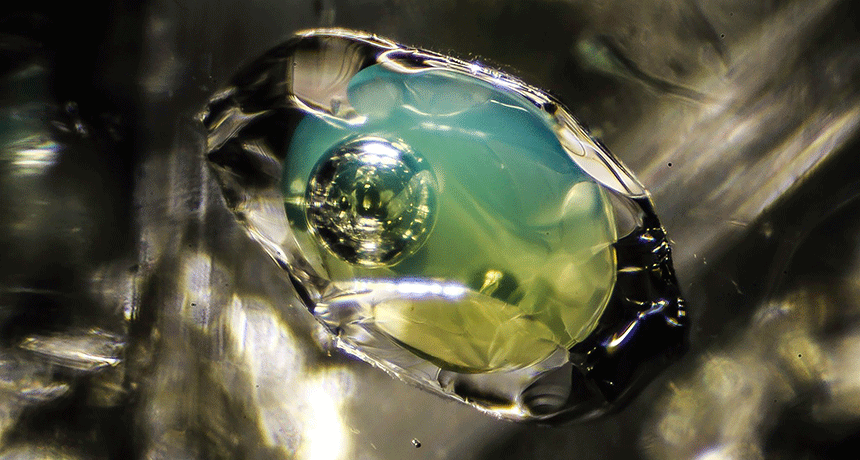
As rocks form slowly, they can trap things in their timeless clutches. A material trapped inside a mineral is called an inclusion.
- Animals
Exploring the mysteries of Cuba’s coral reefs
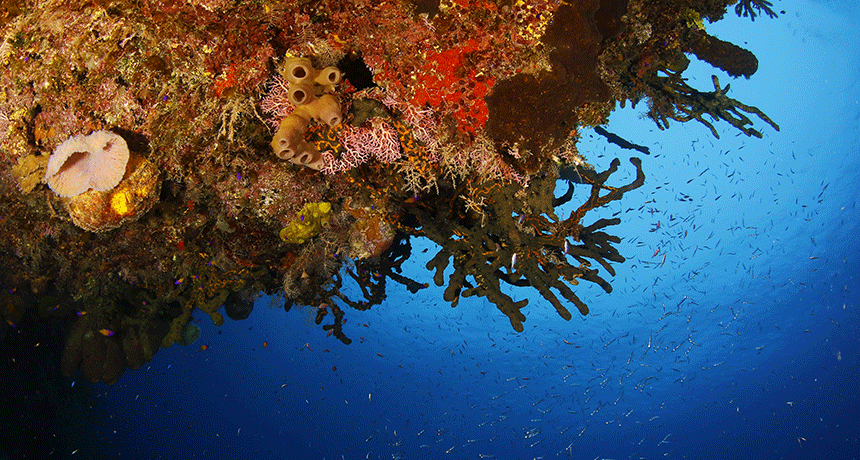
Researchers are studying the mysterious lives of creatures in and near Cuba’s coral reefs. What they learn could help protect ocean life globally.
- Animals
Migrating crabs take their eggs to the sea
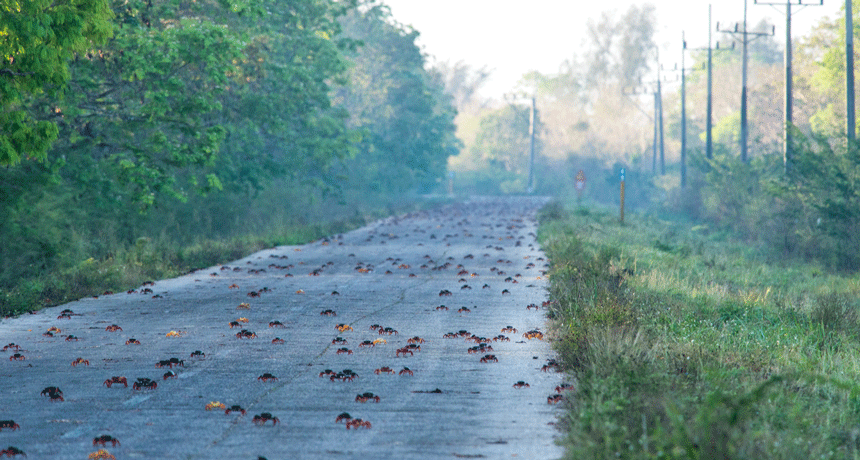
Cuba’s colorful land crabs connect swamp and sea with their yearly mass migrations. Protecting their routes can help other animals too.
- Animals
Explainer: DNA hunters
Snippets of DNA can be left behind by a passing organism. Some researchers now act as wildlife detectives to identify the sources of such cast-off DNA.
- Climate
Explainer: What is thundersnow?
Wacky weather produced lots of thundersnow during New England’s recent winter storms. Some scientists now suspect Mother Nature got some human help.
- Earth
Household products can really pollute the air
Auto exhaust isn’t the only major sources of air pollution, indoors and out. A new study finds a laundry list of household products can — when used by millions — match the contributions of traffic.
- Animals
Fish get pooped living in polluted water
Living in polluted water can tire fish out, a new study finds. This can make it harder for them to find food and avoid being eaten, themselves, by predators.
- Climate
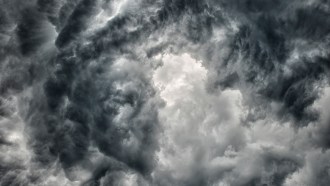
Super-tiny pollutants may help fire up fierce storms
Tiny pollutant particles floating in air may help create clouds and wind, strengthening storms.
- Agriculture
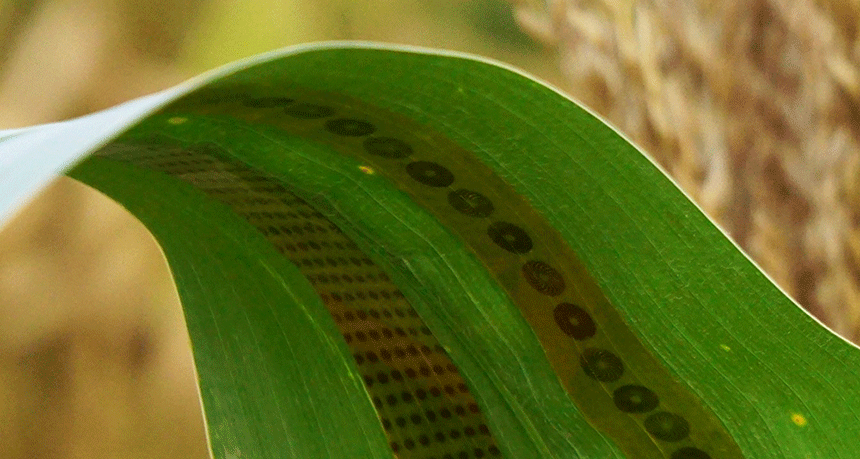
New ‘tattoo’ could lead to drought-tolerant crops
Scientists create stick-on 'plant tattoo.' It measures how efficiently crops use water, a key to better identifying breeding stock for more drought-resistant crops.
- Animals
Rising carbon dioxide could leave tiny lake dwellers defenseless
Rising carbon dioxide in freshwater lakes may change how predators and prey interact.
- Chemistry
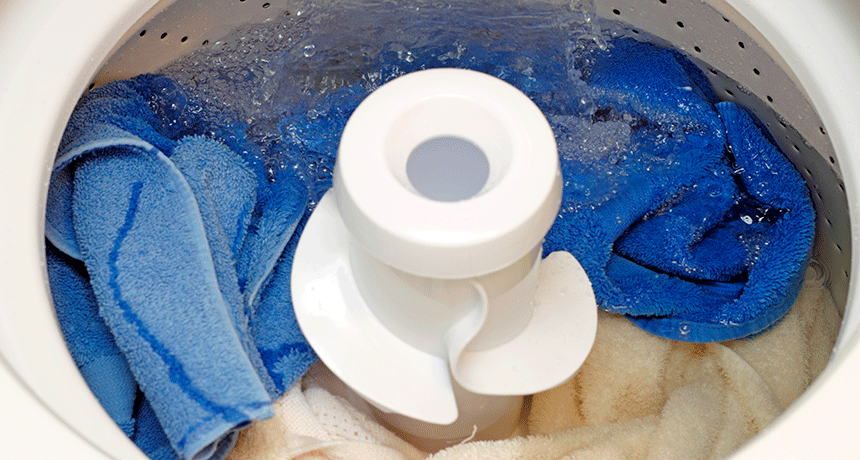
Chemists look to mine silver from laundry wastewater
Recovering silver from wastewater could prevent the metal from ending up in lakes, rivers and the ocean, where it could poison wildlife.
- Climate
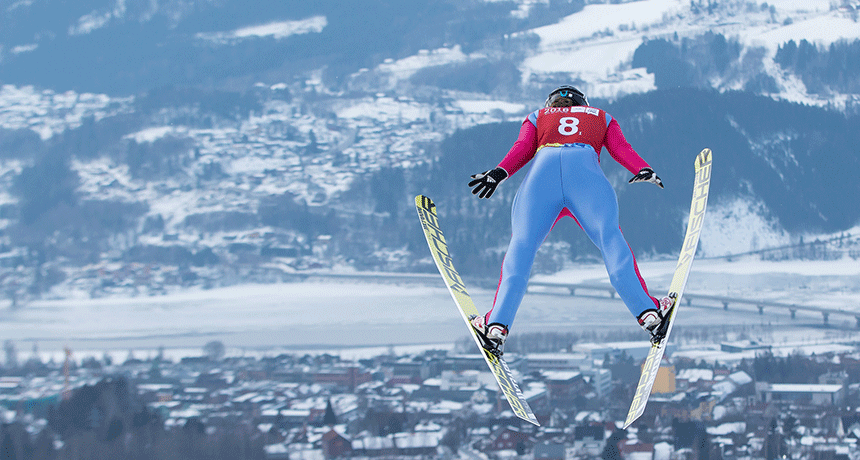
Climate change threatens future Winter Olympics
Higher temperatures, less snow mean many former Winter Olympics sites soon will no longer qualify to host future games, concludes a new analysis.