Earth
- Climate
Arctic ice travels fast, carrying pollution
Climate change is melting old sea ice in the Arctic. Now, younger, thinner ice is migrating far and fast, taking pollutants with it.
- Chemistry
Mystery ‘earmuffs’ sit deep inside Earth
Two vast blobs in Earth’s lower mantle could result from a “trainwreck” of ancient colliding tectonic plates.
- Earth
News Brief: Why rainbows can lose some hues
When the sun is right near the horizon, such as at sunset, its light travels through the most atmosphere. When there’s also plenty of water in the air, this can rob colors from a rainbow, scientists now report.
- Chemistry
Rocks hold clues to ancient die-offs
Rocks that formed during ancient mass-extinction show that the oceans back then had become very warm. That was the last time Earth spewed carbon dioxide into its atmosphere at a rate similar to what is happening today.
- Agriculture
Building better, safer soils
Engineering safer soils for urban growers can reduce the risk of lead exposure and let low-income families enjoy more fresh fruits and vegetables.
- Earth
The most important stories of 2015
From Pluto to gene editing, the year saw a number of notable research discoveries, advances and insights.
- Climate
Paris meeting yields climate agreement
It provides outlines and incentives for nations to curb fossil-fuel use. The goal is to limit global warming to no more than 2° Celsius (3.4 °Fahrenheit) above temperatures typical in the 1750s or earlier.
- Agriculture
New gene resists our last-ditch drug
Antibiotic resistance continues to grow. Now, scientists have found a tiny loop of DNA that resists a drug doctors use as a last line of defense.
- Animals
As big animals poop out
Whales move nutrients from deep ocean to surface waters. From there, nutrients move to land and fertilize continents. But the system is in trouble.
- Climate
Carbon dioxide has an unexpected effect in Antarctica
Antarctica’s frigid surface combined with excess carbon dioxide to create cooling above the remote continent, a new study finds.
- Environment
Water: Getting the salt out
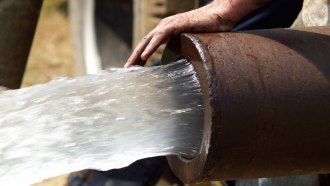
A new water-cleansing technology passes electricity through a flow of salty water. This will generate a zone of fresh water that can then be collected.
- Agriculture
Banana threat: Attack of the clones
Researchers find that disease-causing fungi — all clones of one another — will continue to infect banana plants unless new steps are taken to stop their spread.