Humans
- Health & Medicine
Sleep helps wounds heal faster
Getting enough sleep may be more important for helping wounds heal than getting good nutrition, a new study finds.
- Health & Medicine
E-cigarettes don’t need nicotine to be toxic
E-cigarettes without nicotine can still be toxic. New studies find the flavorings in e-cigarettes can harm cells of the human immune system.
- Health & Medicine
Robots may soon actively crawl through your gut
Doctors are working with engineers to develop robotic tools that can crawl through the body to deliver medicine or scout for signs of disease.
- Brain
Teeny tiny hairs on brain cells could have big jobs
Brain cells have tiny antennae called cilia. But no one really seemed to know what they did. Now, scientists have shown they could play a role in obesity.
- Brain
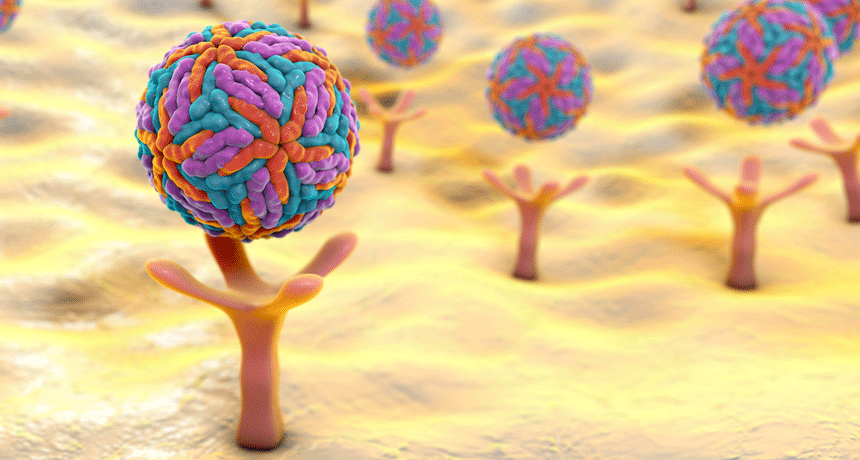
Scientists Say: Receptor
This molecule is a chemical messenger’s docking station. A receptor serves as a lock for cell activity.
- Brain
Cool Jobs: Decoding how your brain ‘reads’
For some stroke victims and people with dyslexia, reading is nearly impossible. These researchers are working to understand why.
- Health & Medicine
How the body protects us from potentially toxic amounts of sugar
A study in mice shows the small intestine shields the liver from the potentially damaging effects of exposure to fructose — but only up to a limit.
- Health & Medicine
Teens win big prizes for research on potato killer, vaping and a rare disease
The Regeneron Science Talent Search awarded more than $2 million in prizes this year. This year’s top winners tackled plant disease, vaping and more.
- Animals
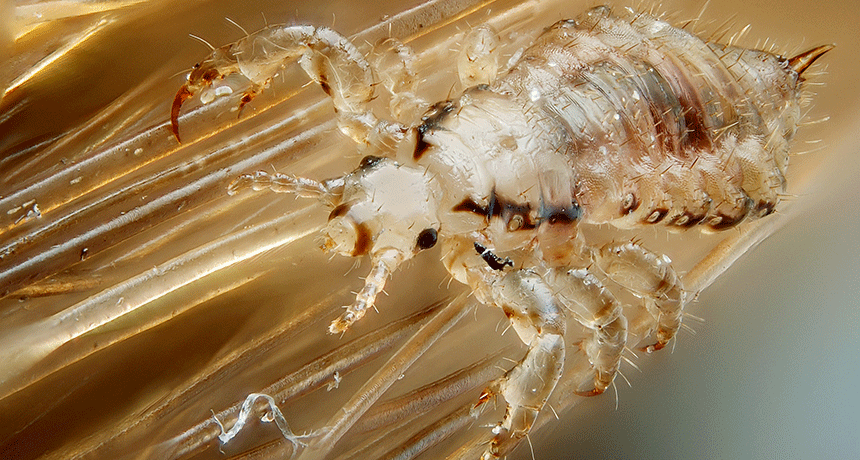
Scientists Say: Ectoparasite
Many people think of parasites as organisms that live inside their hosts. But some of them can be found on the outside instead.
- Fossils
Ancient jaw suggests humans left Africa earlier than thought
A fossil jaw found in a cave in Israel is at least 177,000 years old. The scientists who found it think it shows humans left Africa much earlier than thought.
- Brain
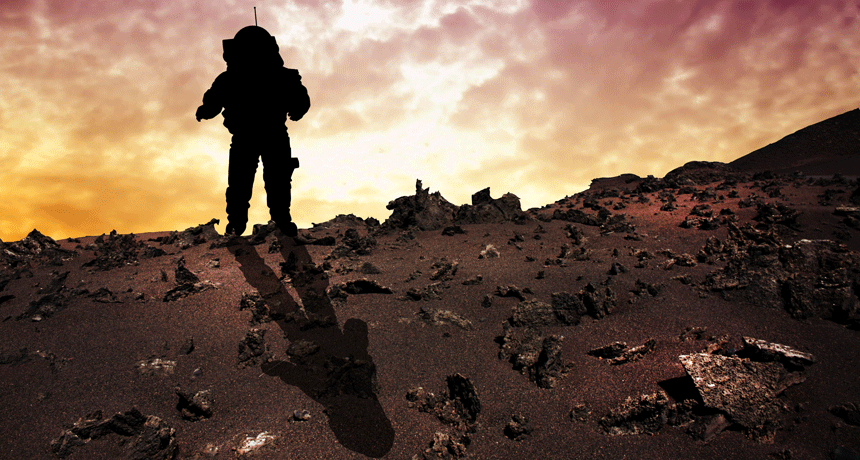
En route to Mars, astronauts may face big health risks
Going into space brings the thrill of a new frontier — and risks that scientists are racing to understand, from radiation to isolation.
- Animals
Yuck! Bedbug poop leaves lingering health risks
Chemical residues left by bedbugs can persist, even when the pests have been eradicated. This may explain lingering allergic symptoms in cleaned up homes, a new study concludes.