Humans
- Health & Medicine
Explainer: What is a vaccine?
Vaccines give the body’s natural defense system a boost against infectious disease.
- Climate
Hunting the mysterious source of a global illness
Doctors and scientists around the world are scouring the environment for the elusive cause of Kawasaki disease, a harmful childhood illness.
- Brain
Adolescents are brain-dense — and that’s good
Gray matter is densely packed in adolescents, brain researchers now find. This may explain how developing adults cope with decreasing gray matter volume.
- Health & Medicine
Therapeutic robots may soon swim within the body
Scientists are designing tiny robots that may one day do work inside the human body.
- Brain
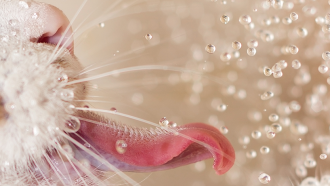
Tongues ‘taste’ water by sensing sour
Water doesn’t taste like much, but our tongues need to detect it somehow. They may do it by sensing acid, a new study shows.
- Archaeology
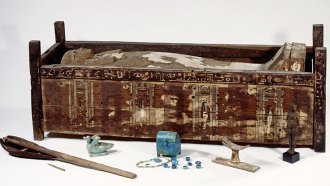
DNA from African mummies tie these folk to Middle Easterners
Ancient DNA extracted from 90 Egyptian mummies reveals genetic links to Greece and the Middle East.
- Health & Medicine
Think you’re not biased? Think again
Everyone holds some unconscious bias about certain social groups, even when they don’t mean to. Scientists are learning how people can fight such implicit biases.
- Health & Medicine
Your gut’s germs may decide whether white bread or whole wheat is best — for you
Surprise! Gut microbes may determine how your body responds to starches in the diet.
- Animals
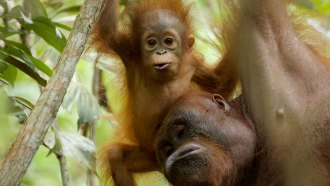
Orangs nurse young for more than eight years!
Orangutan moms and babies have been tricky to study in the wild, so researchers used dental tests to reveal a record setting nursing period.
- Health & Medicine
Scientists Say: Acoustic
Acoustic is an adjective used to describe something involving sound. It’s also a noun that refers to the branch of physics that studies sound.
- Animals
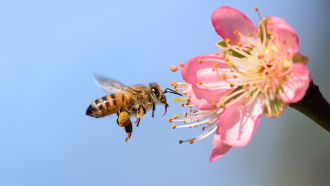
Popular pesticide may harm bee flight
In a lab experiment, honeybees flew sluggishly after eating pesticide-tainted food.
- Archaeology
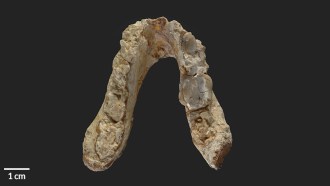
European fossils may belong to earliest known hominid
New fossils suggest that the earliest non-ape human ancestors may have evolved in Europe, not Africa.