Life
- Animals
Chef puts eco-bullies on the menu
Some immigrant species can become a nuisance, eating up or displacing the natives. Often people find little incentive to catch and remove the newcomers — unless they find them too yummy to pass up.
- Animals
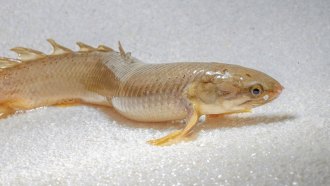
A fish out of water — walks and morphs
When this modern ‘walking’ fish was raised on land, its body changed. How it adapted resembles some prehistoric fish. These alterations hint at evolutionary changes that may have made life on land possible.
- Brain
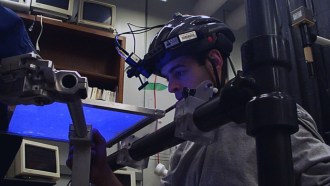
Mistakes: A key to learning
This man uses a robotic arm to move a cursor across a computer screen. The screen blocks his view of his hand and arm. This focuses his attention on any errors he makes as he tries to move a cursor to a target location.
- Tech
Plants ‘listen’ for danger
Scientists used lasers to show that plants can “hear” insect pests. Those leafy plants then mount a chemical attack in response to the bug’s chewing sounds — but not toward harmless noises such as a gentle breeze or a bug’s mating call.
- Brain
Learning rewires the brain
Brain cells actually change shape as we learn. It’s one way we cement new knowledge. And much of the action happens as we sleep.
- Health & Medicine
Starchy foods may cut meaty risks
Eating red meat can increase the risk of certain types of cancer. But scientists have discovered that eating potatoes and other foods containing 'resistant' starch can help limit those risks.
- Plants
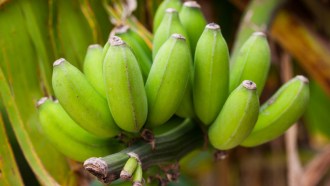
Saving the banana
A number of diseases threaten the world’s most popular fruit. Scientists are working to fight these blights. But if they don’t succeed, the sweet banana that’s a breakfast staple could disappear.
- Health & Medicine
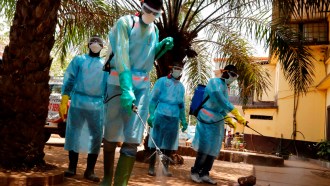
Ebola treatments and vaccines could be near
Using experimental medicines against Ebola might help to slow or end an outbreak in Africa that has defied efforts to control it.
- Health & Medicine
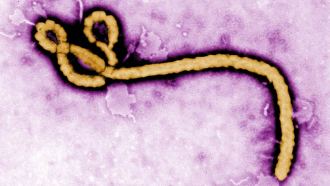
Explainer: What is Ebola?
A virus is behind the hemorrhage-inducing infection called Ebola. It causes fevers and often intense bleeding — seemingly from anywhere and everywhere.
- Fossils
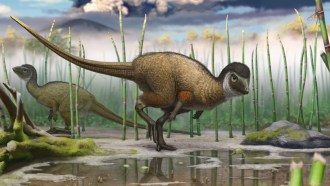
Feathers: What every dino wore?
A dino discovery in Siberia suggests feathers were common among the ancient ‘lizards.’
- Microbes
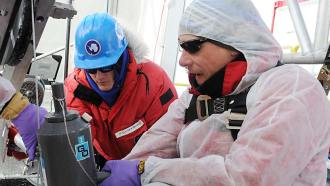
Buried Antarctic lake teems with life
Last year, scientists drilled 800 meters (roughly a half mile) down through ice to reach a pitch-black Antarctic lake. They now report that lake hosts a thriving community of one-celled microbes.
- Animals
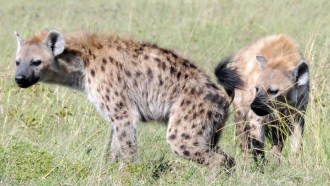
Germs explain some animal behaviors
The bacteria that people and other animals host in and on their bodies are invisible to the eye. Yet they can play a very visible role in behavior. It’s something scientists are just coming to appreciate.