Life
- Animals
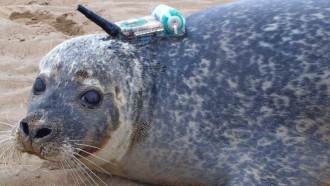
Wind farms: Restaurants for seals?
Scientists have tracked harbor seals visiting the turbines of ocean wind farms. The predators may be drawn by fish that make their homes in the artificial reefs created by the manmade structures.
- Animals
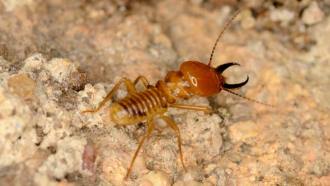
How termites ‘hear‘ about trouble
When danger comes too close, termites bang their heads against the walls of their homes. This action sends out a warning vibration that others ‘hear’ with their legs.
- Environment
Watering plants with wastewater can spread germs
Recycled waste water may slake the thirst of outdoor plants. But it also can spread bacteria, a new study finds — germs that antibiotics may not be able to kill.
- Animals
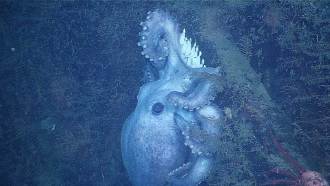
Octopus sets egg-nurturing record
Animals will do extraordinary things to help their babies survive. Consider ‘Octomom:’ She sat on one clutch of eggs for nearly 4.5 years.
- Fossils
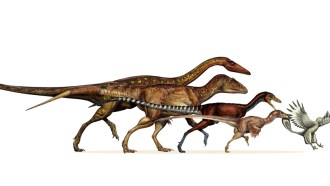
Dinos ‘quickly’ shrunk into birds
Scientists had long known birds descended from dinosaurs. A study now shows that the morphing from dinos into birds went along with a quick and steady shrinking of their body sizes.
- Microbes
Record Ebola epidemic strikes
A record outbreak of the deadly disease has already claimed nearly 1,000 lives in West Africa. Scientists suspect bats or eating some other wild animals may have triggered the epidemic.
- Brain
Lacrosse: Different genders, same injuries
Scientists find that boys’ and girls’ versions of lacrosse lead to similar injuries. Because girls frequently get concussions, the study argues that like the boys, girls too should wear helmets.
- Health & Medicine
Clay: A new way to fight germs?
Geologists have discovered a type of volcanic clay that shows promise in fighting infections — maybe even ones resistant to antibiotic medicines.
- Animals
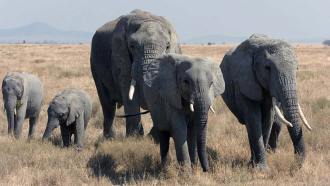
Elephants appear to be super sniffers
Elephants are not only massive, but also possess the most odor-detecting genes of any animal known, new research shows.
- Microbes
The Bahamas’ African roots
Ocean bacteria may have built the Bahama islands, fed by dust blown across the Atlantic from the Sahara Desert.
- Genetics
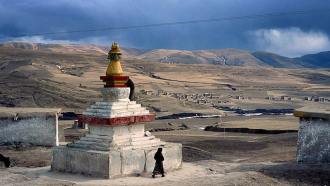
High-altitude help from extinct ancestors
The Tibetan plateau is high in altitude but low in oxygen. An unusual version of one gene in Tibetans' DNA helps them survive this environment. And that gene appears to have been passed along from Denisovans, a Neandertal-like ancestor.
- Fossils
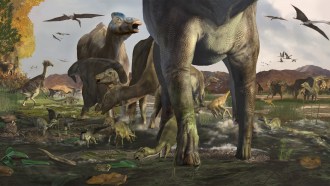
Some Arctic dinos lived in herds
Fossil footprints retrieved from Alaska indicate that plant-eating duckbill dinos not only traveled as extended families but also spent their entire lives in the Arctic.