Life
- Animals
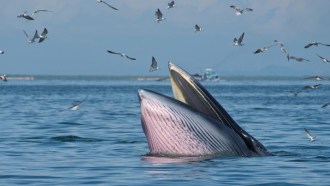
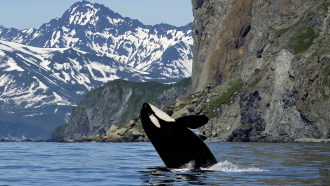
Cool Jobs: A whale of a time
Studying blue whales, spinner dolphins and other cetaceans demands clever ways to unveil the out-of-sight behaviors of these marine denizens.
- Animals
Explainer: What is a whale?
Can a dolphin be a whale — or a whale be a dolphin? Yes, because the terms used to describe the biggest marine mammals are quite elastic and fuzzy.
- Microbes
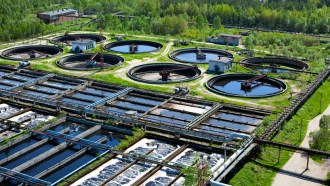
How a germ killer could backfire
A common ingredient in toothpaste and hand sanitizers kills germs on contact. But it also can kill the helpful germs that make water safer.
- Fossils
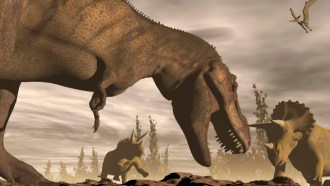
Hot-blooded dinos? Try lukewarm
New study finds these reptiles may have had an internal furnace that sort of resembled some sharks. It appeared to run neither hot nor cold.
- Genetics
Owww! The science of pain
No one likes pain, but it keeps us alive. That’s why scientists want to learn how best to coexist with this complicated and still somewhat mysterious sensation.
- Animals
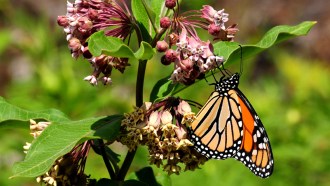
Salted butterflies
The salt used on winter ice can alter the bodies of summer's butterflies. Males develop larger muscles and females get bigger brains.
- Animals
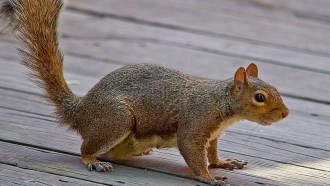
Stalking squirrels for science
A scientist noticed the squirrels in his family’s town, and began studying them. His results show why squirrels are such good city dwellers, and prove that science is right outside your door.
- Brain
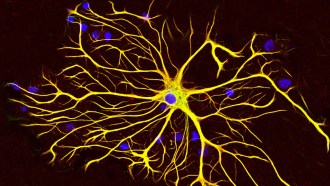
Hunger’s little helpers
Astrocytes were thought to be nothing more than support cells for neighboring nerve cells. A new study suggests they do much more. These brain cells may help control appetite, too.
- Fossils
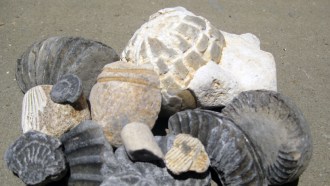
Fossil hunting can start as child’s play
Paleontology isn’t just for professionals. You don’t even need to be a teen to sometimes make startling — and scientifically important — contributions.
- Fossils
Explainer: How a fossil forms
Minerals can replace any bone, shell or once-living tissue and also fill in the spaces between these hard parts, birthing a fossil.
- Animals
A library with no books
The Macaulay Library at Cornell University has no books. Instead, the audio library has been accumulating sound recordings since 1929.
- Animals
A library of tweets (and howls and grunts)
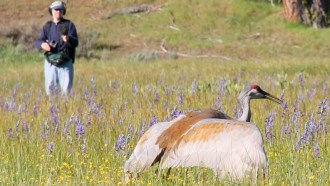
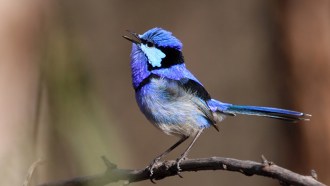
The Macaulay Library houses a world of animal sounds. And now anyone with an Internet connection can check out this audio collection.