Life
- Animals
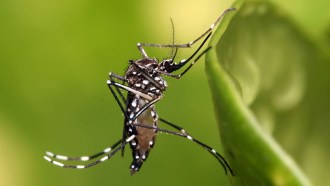
Killing mosquitoes with cashews
When dengue fever came to his hometown, Gabriel Galdino looked for ways to stop its carrier, the mosquito. His findings got him a spot at the 2014 Intel International Science and Engineering Fair.
- Microbes
Convincing bacteria they’re alone
Caffeine may be the trick to confusing some bacteria into thinking they’ve not yet summoned enough troops to launch a successful attack on their host. It could prove an alternative to antibiotics for certain infections.
- Animals
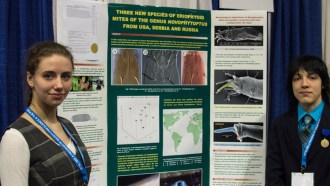
Mite-y discoveries!
Two teens from Russia discovered tiny mites living inside grass-like plants called rushes. Three of the species they turned up are new to science.
- Animals
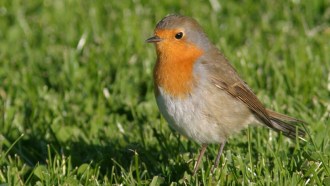
Electronics may confuse a bird’s ‘compass’
Birds use Earth’s magnetic field to help guide them as they migrate. A new study suggests that electromagnetic radiation given off by some electronic devices may act like “noise” and confuse the long-traveling birds.
- Animals
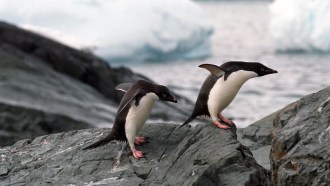
Even penguins get the flu
Scientists have just identified ‘live’ bird flu virus in Antarctic penguins. But the infections may not be novel. There are some signs these germs have been infecting local wildlife for up to 80 years.
- Animals
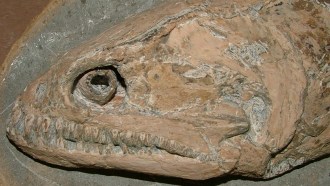
Surprise! Fossils in a flash
By studying how dead tissues decay — or turn to ‘instant’ fossils — scientists are gleaning helpful clues to what ancient life looked like.
- Animals
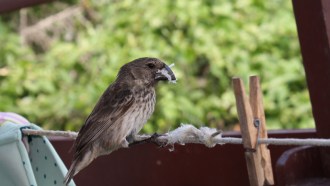
Helping birds doctor their babies
Darwin’s finches will soften their nests by weaving in fibers, such as stray bits of cotton. An observant biologist offered those birds some insecticide-treated cotton and the birds took it, which saved their young from deadly parasites.
- Brain
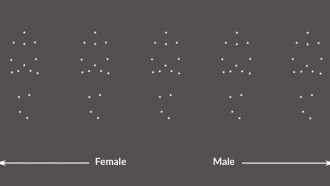
The scent of a woman — or a man
Animals unwittingly signal things about themselves by giving off subtle scents. A new study claims the same is true for people.
- Animals
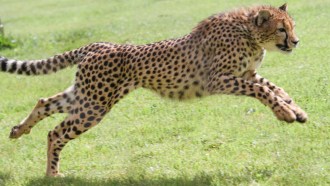
Move over cheetah: Mite sets new speed record
A super-speedy species sprints faster than any other land animal — for its size, a new study finds. Scientists may someday tap this tiny mite’s technique to create robots and other devices that zip around at sensational speeds!
- Animals
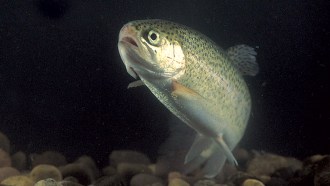
Don’t mess with a frustrated fish
When a trout doesn't get the snack it expected, look out. These fish get aggressive. Sometimes they can defeat even bigger fish.
- Health & Medicine
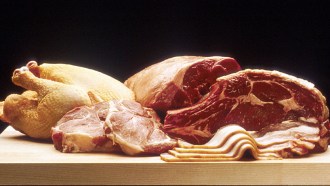
Infected cutting boards
Germs can hitchhike into the kitchen on meat and many types of produce. A new study finds that some of those germs are particularly nasty. They are immune to the one or more of the drugs doctors would prescribe to wipe out the infection.
- Animals
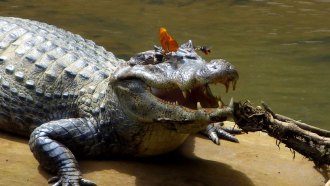
These insects thirst for tears
In some parts of the world, insects will drop by for a savory beverage. Interestingly, neither a croc — nor a scientist who offered his eyes up to ‘tear-sipping’ bees — seemed bothered much by the freeloaders.