Life
- Brain
Autism unlocked
Experts are learning how to diagnose this brain disorder in infancy. That may be early enough to allow nerve cells in the brain to develop new connections — ones that form detours around autism-affected areas.
- Fossils
Lobster’s ancient ‘cousin’ was gentle giant
Some 500 million years ago, this top predator would have likely netted its meals with long bristly limbs.
- Fossils
Scary ‘chicken’ roamed Earth with T. rex
Scientists have just pieced together evidence of a weird new dinosaur that sported sharp claws, feathers and a beak. And it just may have been one of the last dinos to roam Earth about 67 million years ago.
- Animals
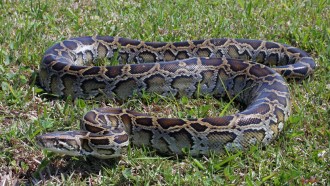
Pythons seem to have an internal compass
The giant, Burmese pythons living in Florida’s Everglades like their adopted home. And new research shows they can find their way back to it if people try to move them somewhere else. Not all snakes will do this.
- Animals
Quieter vibes for city spiders
How much a web vibrates affects how well a spider senses when that web has captured prey. But webs attached to concrete, plastic and other artificial materials vibrate less than do those built on natural materials, such as twigs or leaves.
- Microbes
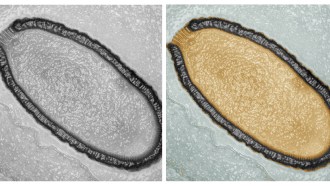
Return of the giant zombie virus
Scientists have discovered a new type of virus in Siberian soils. It's the largest virus ever discovered. And guess what: It could infect cells even after 30,000 years in cold storage.
- Health & Medicine
Some of chocolate’s health benefits may trace to ‘bugs’
Dark chocolate offers people a number of health benefits. A new study finds that the breakdown of chocolate by microbes in the human gut be behind some benefits.
- Animals
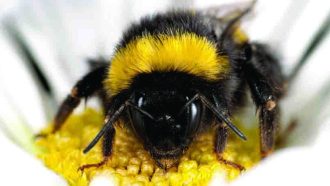
Passing diseases from bee to bee
A study finds that the viruses and parasites that plague honeybees can infect bumblebees too, sickening another important pollinator.
- Brain
Mapping the brain’s highways
A new map may explain why some brain injuries are worse than others. Even relatively minor injuries that disrupt message superhighways may have a more devastating impact than some seemingly catastrophic injuries.
- Animals
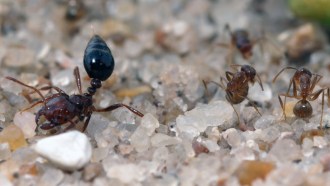
‘Crazy’ ant fight
By neutralizing the poison produced by fire ants, ‘crazy’ ants can survive heated battles. And that may help explain why crazy ants are edging out fire ants in parts of the southern United States.
- Brain
Why boys face higher autism risk
Boys develop autism at four times the rate seen in girls. Girls’ genes are better protected from the mutations linked to this brain disorder, data now suggest.
- Fossils
Reviving dinosaurs
With the help of computers, researchers are getting a pretty good idea of how these ancient creatures moved, walked and ate.