Life
- Animals
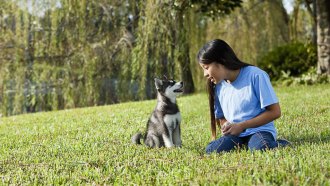
Analyze This: Puppies naturally mimic human actions
Unlike cats, whose ancestors hunted alone, dogs evolved from a species that hunted in packs. Being social might explain why pups copy humans.
- Genetics
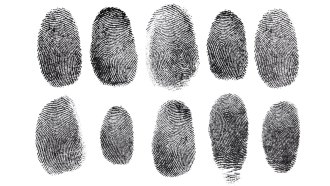
Experiment: Are fingerprint patterns inherited?
Let’s investigate whether fingerprint patterns are created randomly or whether they are influenced by genetics.
- Animals
This biologist uses microwave radiation to save endangered species
Pei-Chih Lee works to preserve genetic material that can help researchers learn more about endangered animals, such as pandas and clouded leopards.
- Animals
Let’s learn about frogs
Frogs are a fascinating bunch of amphibians. Unfortunately, they’re also dying off in huge numbers.
- Animals
Random hops always bring jumping beans to shade — eventually
It’s not fast, but jumping beans use randomness to maximize their chances of getting out of the sun’s heat.
- Climate
Here’s how to increase clean energy without harming wildlife
Wind farms, solar panels and more take up land and may harm wildlife. Researchers are working to resolve this conflict.
- Animals
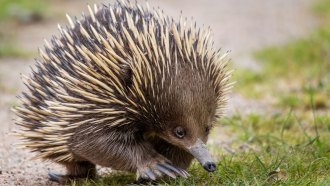
When it’s hot, echidnas blow snot bubbles to cool off
These spiky Australian mammals have a trick to moisten their noses, allowing them to survive hot temperatures that should kill them.
-
- Health & Medicine
New brain scans may show if a concussion has not yet healed
Concussions change certain brain waves, and delta waves may be the best signs of when teens can return to competitive sports.
- Materials Science
Analyze This: Algae behind blue-glowing waves light up a new device
Some algae glow blue when they experience forces. Held in transparent plastic, they now make devices light up in response to gentle pushes and tugs.
- Archaeology
Carvings on Australia’s boab trees reveal a people’s lost history
Archaeologists and an Aboriginal family are working together to find and document a First Nations group’s lost ties to the land.
- Microbes
Bacteria give some cheeses their distinct flavors
Linking types of bacteria to specific flavors could help cheesemakers tweak their products — or even develop new cheese flavor.