Life
- Brain
Lying won’t stretch your nose, but it will steal some brainpower
The science of lying shows that most people don’t lie often. But when they do, it takes a surprising toll on their brains.
- Animals
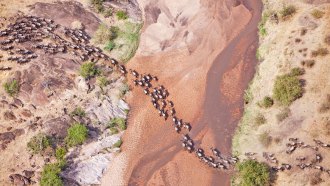
Scientists Say: Migration
Migration involves the movement of animals or people from one place to another.
- Animals
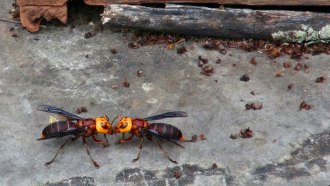
The scent of queen ‘murder hornets’ can lure males into traps
Traps baited with compounds found in the mating pheromone of hornet queens attracted thousands of males.
- Life
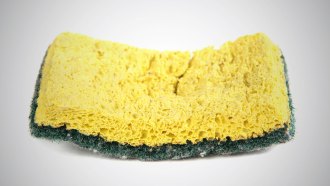
Kitchen sponges are bacteria’s dream home
Sponges are favorite spots for bacteria, partly because of the mixed-housing environment that the cleaner-uppers offer microbes.
- Chemistry
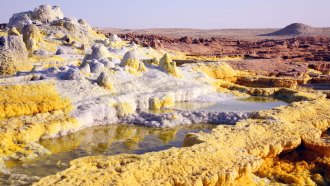
Scientists Say: Inorganic
Inorganic molecules include salts, minerals and other compounds that lack organics’ carbon-hydrogen bonds.
- Animals
Surprise! Sixteen tiny wasp species found masquerading as one
Scientists used new and old tools to overturn 160-year-old ideas about this wasp. They show you can’t tell a wasp by its looks.
- Animals
One of the earliest meat-eating mammals was saber-toothed
Millions of years before the evolution of saber-toothed cats, a newly discovered "hypercarnivore" prowled the forests of what is now San Diego.
- Animals
Mosquitoes see red, which may be why they find us so appealing
Mosquitoes not only see colors, but also prefer certain ones, such as the hues of human skin.
- Life
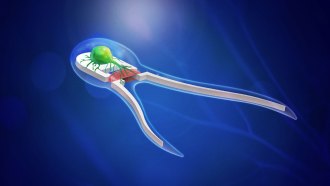
Robots made of cells blur the line between creature and machine
Scientists are using living cells and tissue as building blocks to make robots. These new machines challenge ideas about robots and life itself.
- Health & Medicine
Sickle-cell gene therapies offer hope — and challenges
Doctor Erica Esrick discusses existing treatments and an ongoing clinical trial for a gene therapy to treat sickle cell disease.
- Genetics
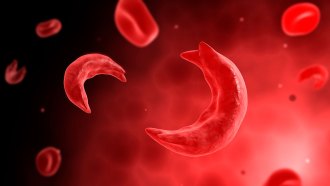
Explainer: What is sickle cell disease?
Gene mutations can alter an individual’s hemoglobin in ways that curl their blood cells. This can cause painful sickle cell disease.
- Animals
The end of the dinosaurs appears to have come in springtime
Fish fossils from North Dakota suggest when the Chicxulub asteroid devastated Earth, triggering the mass extinction of dinosaurs and other species.