Life
- Health & Medicine
Explainer: The body’s immune system
An army of cells — and their protein arsenal — work to keep us safe. Several squads of special forces possess unique superpowers to disable or kill intruders.
- Brain
Is the sky really blue? It depends on what language you speak
English speakers talk about color a lot but rarely about smell. Researchers are learning how those who speak other languages sense the world and why differences arise.
- Brain
Teen inventors say: There’s got to be a better way
Finalists in the 2022 Regeneron Science Talent Search are revamping prostheses, earthquake safety systems and air travel.
- Animals
Analyze This: Birds may decorate nests to scare off rivals
Birds that nest in holes face stiff competition for nest sites. Some use feathers, also found where predators have made a kill, to keep rivals away.
- Chemistry
Scientists Say: Cellulose
Cellulose is an abundant natural polymer found in plants and algae. It’s used to make everything from paper to clothing.
- Animals
Orcas can take down the largest animal on the planet
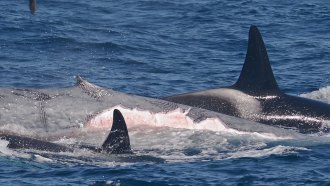
For the first time, scientists observed that orcas can kill blue whales by using the same hunting techniques that have worked on other large whales.
- Science & Society
Explainer: What is an endangered species?
Threats such as climate change and habitat loss can put species at risk of going extinct. Different words describe that risk.
- Animals
These flying robots protect endangered wildlife
Flying drones make conservation work much easier. Around the world, drones and artificial intelligence help scientists study or protect endangered animals.
- Ecosystems
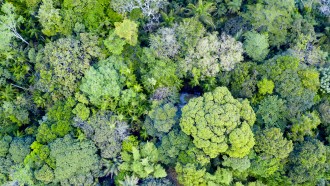
More than 9,000 tree species may be waiting to be discovered
Scientists estimated how many tree species are on Earth, an important step for forest conservation and protecting biodiversity.
- Animals
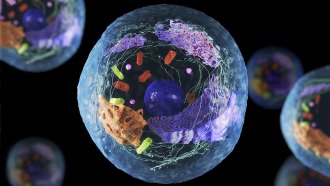
Explainer: Cells and their parts
Life as we know it depends on the coordination of structures inside cells — whether a living thing has only a single cell or trillions of them.
- Animals
La nutria soporta el frío, sin un cuerpo grande ni capa de grasa
Al mamífero más pequeño del mar no le es fácil mantenerse caliente. Ahora, los científicos han descubierto cómo sus células responden al desafío.
- Animals
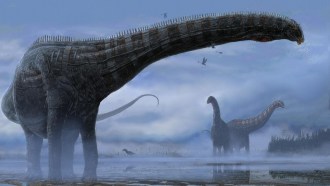
Dinos may have had the sniffles 150 million years ago
A respiratory infection that spread to air sacs in the vertebrae of a sauropod dinosaur likely led to the dino's now-fossilized bone lesions.