Physics
- Materials Science
New black hair dye uses no harsh chemicals
Scientists have developed a new black-carbon-based hair dye. Instead of using damaging chemicals to dye hair, flexible flakes of carbon coat each strand.
- Animals
In a colony, king penguins act like a liquid
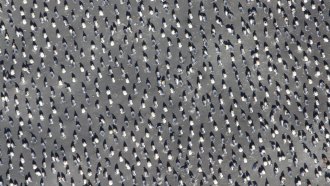
Is this a living liquid? King penguins move around within their colonies, clearing out some space, and then refilling it. That behavior resembles a liquid, scientists conclude.
- Physics
An ancient plant inspires a new lab tool
Researchers have designed a lab tool that moves liquids from one place to another by mimicking a plant called a liverwort.
- Chemistry
Hard-to-burn ‘smart’ wallpaper even triggers alarms
Scientists have made wallpaper that won’t easily burn. And embedded nanowires can be linked to a sensor to sound an alarm when the paper gets too hot.
- Chemistry
Light could make some hospital surfaces deadly to germs
A new surfacing material can disinfect itself. Room lighting turns on this germ-killing property, which could make the material attractive to hospitals.
- Physics
Star Wars‘ cutest droids would get stuck on the beach
On screen, R2D2 and BB-8 travel over every type of terrain. But in real life, any sandy path would stop these droids short.
- Life
This power source is shockingly eel-like
The electric eel’s powerful electric charge inspired this new squishy, water-based new approach to generating power.
- Life
These fish have truly flashing eyes
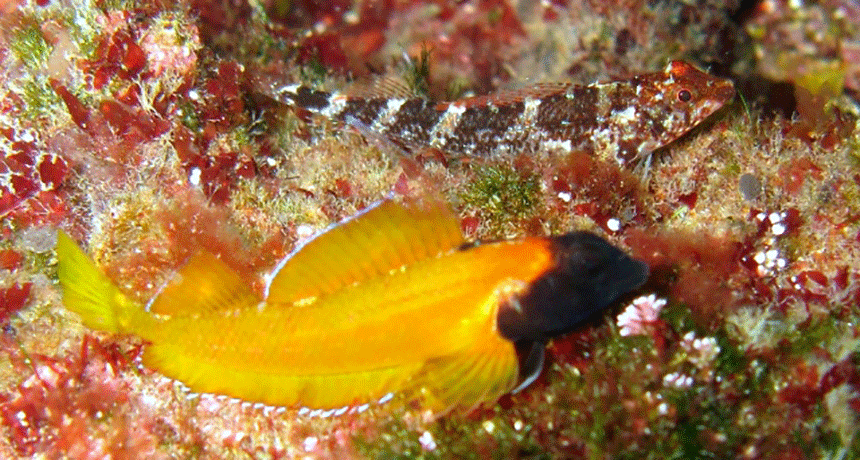
A reef fish can send flashes of light from its eyes. This trick might help the fish track its prey.
- Health & Medicine
Scientists offer new explanation for knuckle-cracking
That annoying pop may come from the partial collapse of bubbles in the joint fluid.
- Computing
Zap! Laser tattoos could create electronics to eat or wear
Lasers can tattoo a nontoxic form of carbon onto everyday items. This one day could lead to wearable — even edible — electronics.
- Tech
Electricity sensor harnesses a shark’s secret weapon
A new “quantum” material mimics the sensors that help a shark sense its prey. Like a shark, it can detect tiny electric fields.
- Physics
Wireless devices crowd out cosmic radio signals and more
Cell phones and other devices emit radio waves that can interfere with important scientific research. That’s why researchers are seeking ways to share the radio spectrum.