Physics
- Animals
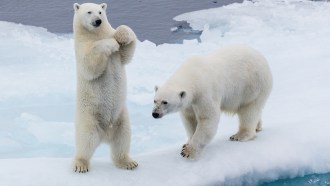
Tiny bumps on polar bear paws help them get traction on snow
Super-small structures on the Arctic animals’ paws might offer extra friction that keeps them from slipping on snow, a new study concludes.
- Physics
Explainer: What is friction?
The force of friction always acts to slow things down. It depends on just two factors: the surfaces and how hard they press together.
- Physics
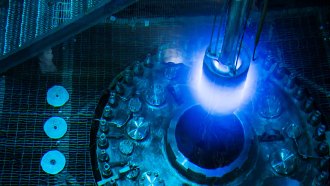
Explainer: Radiation and radioactive decay
Like clockwork, radioactive forms of some elements shed parts of themselves as they attempt to become nonradioactive.
- Physics
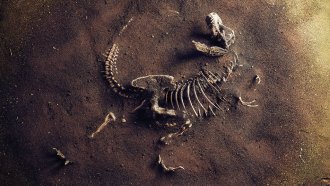
Explainer: Radioactive dating helps solve mysteries
Knowing the decay rate of radioactive elements can help date ancient fossils and other artifacts.
- Earth
Fossil-fuel use is confusing some carbon-dating measurements
Carbon-14 dating of recent artifacts will soon give scientists confusing results. That’s another price society pays for its reliance on fossil fuels.
- Plants
Why dandelions are so good at widely spreading their seeds
Individual seeds on a dandelion release most easily in response to winds from a specific direction. As the wind shifts, this scatters the seeds widely.
- Tech
A tool as small as a human cell can scan for contaminants and more
Tiny spectrometers might someday show up on smart devices. They could help people scan for ingredients or contaminants in foods and other materials.
- Chemistry
Scientists Say: Fluorescence
This property causes materials — including some animals’ skin, fur or feathers — to glow under light.
- Physics
Protons may be stretchier than physicists had thought
Physicists looked at how the quarks that make up protons move in response to electric fields. And they found more movement than expected.
- Animals
Insect swarms might electrify the air as much as storm clouds do
Honeybees that flew over a voltage sensor sparked a new look at the effect of insects on electricity in the atmosphere.
- Chemistry
Explainer: What is a hydrogel?
These unusual materials have a host of unusual properties. You can even make a starch-infused version in your kitchen.
- Materials Science
Let’s learn about microplastics
Microplastics have turned up everywhere from the highest mountains to the bottom of the ocean — and even inside animals and people.