Physics
- Physics
These antennas turn anything into a radio station
Engineers have developed antennas that can turn ordinary objects — even posters — into radio stations.
- Climate
Cool Jobs: Head in the clouds
What do a microbiologist, an atmospheric scientist and a materials engineer have in common? They’ve all got their heads in the clouds.
- Physics
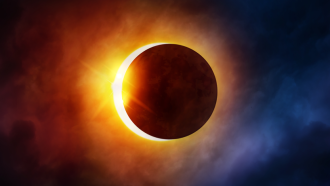
Getting ready for the solar eclipse
A total solar eclipse will race across the continental United States in August 2017. Scientists and the public are preparing to watch and learn.
- Tech
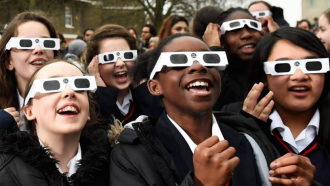
How to safely watch a solar eclipse
Certified safety glasses are a must for protecting your eyes when looking at the sun. Here’s how to safely enjoy a solar eclipse, like the one on August 21, 2017.
- Physics
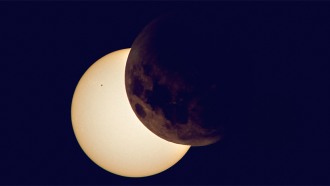
Eclipses come in many forms
Eclipses are one of nature’s most awesome spectacles, and scientists have learned a lot by observing them and related celestial alignments — occultations and transits.
- Computing
Single atoms become teensy data storage devices
Most people consider a thumb drive to be an amazingly small device for storing data. But this new system uses a ten-thousandth the number of atoms of today’s data-storage devices.
- Physics
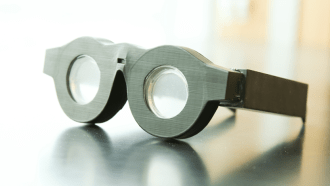
Auto-focus eyeglasses rely on liquid lenses
Engineers have designed what could be the last eyeglasses anyone would need. Right now, they’re bulky but smart. Liquid lenses are key to their adjustability — and those lenses focus automatically.
- Animals
Frog’s gift of grab comes from saliva and squishy tissue
What puts the grip in a frog’s high-speed strike? Quick-change saliva and a super-soft tongue, scientists find.
- Physics
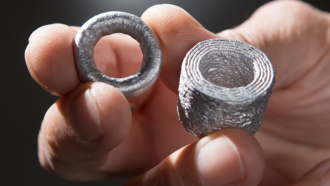
Father and son harness magnetic fields for new type of 3-D printing
A dad and his son have developed a new 3-D printing method in their basement. It harnesses pulsed magnetic fields to build metal objects one tiny aluminum drop at a time.
- Animals
Cool Jobs: A world aglow
Three scientists probe how the natural world makes light, in hopes of using this information to design new and better products.
- Physics
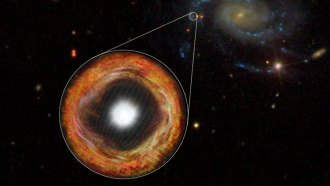
Star caught passing gas before exploding
Stars can become unstable as they near death, a new study suggests. Some may even spew gas for a year or so before they explode.
- Physics
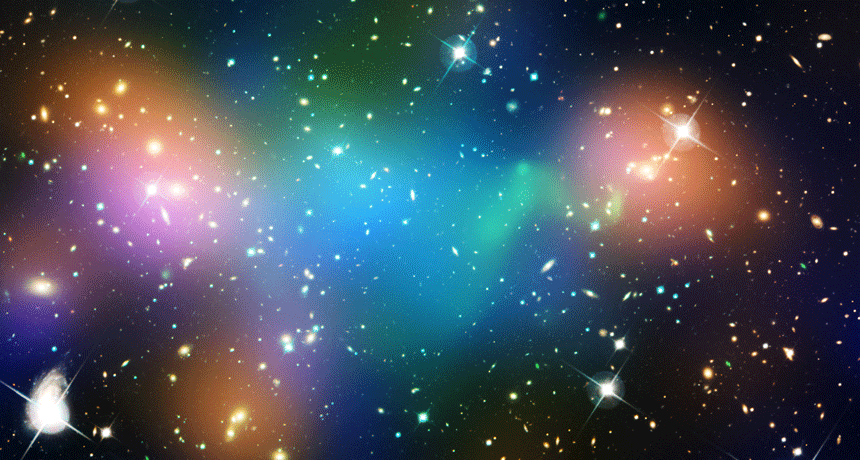
Scientists Say: Dark matter
Most of the universe isn’t made of stuff we can see. Scientists think some of it might be made of dark matter — matter that emits no radiation.