Science & Society
- Physics
Disabilities don’t stop these experts in science and tech
People with disabilities are as varied as the careers some of them pursue in science, technology, engineering and math.
- Science & Society
Deaf students can overcome hurdles to careers in STEM
Classroom tactics to help deaf students may also pay big benefits for students who hear just fine.
- Animals
Whales feast when hatcheries release salmon
Humpback whales are visiting sites where hatcheries release juvenile salmon in Alaska. It’s a dining bonanza for the huge whales.
- Climate
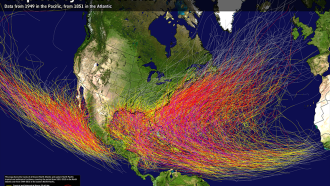
Analyze This: Seasonal hurricane costs have been rising sharply
Scientists study past hurricanes to help them predict future risks. Better predictions can help communities prepare for monster storms.
- Science & Society
Calling scientists of all colors
More black, Hispanic and Native American scientists and engineers are needed to tackle important problems such as climate change and disease.
- Oceans
Cuba: How politics has become a hurdle for its researchers
Scientists in Cuba face difficulties getting equipment and publishing results due to a U.S.-imposed trade embargo on their country.
- Health & Medicine
Racial discrimination may aggravate asthma, study finds
Kids who suffer racial discrimination are more likely to develop a hard-to-treat form of asthma. New data suggest the stress of bigotry can affect the immune system, potentially making the disease worse.
- Health & Medicine
Mindfulness in eating pays the body big dividends
Schools are starting to use mindful eating in the classroom — and science shows that it can reduce overeating and improve overall health.
- Brain
Many U.S. football players had brain disease, data show
The brains of more than 200 former football players were donated to science upon their deaths. Signs of severe brain trauma showed up in the vast majority.
- Math
Math isn’t just for boys
The United States won the International Mathematical Olympiad in 2015 and 2016. The big question: Why wasn’t there even one girl on either year’s team?
- Archaeology
DNA from African mummies tie these folk to Middle Easterners
Ancient DNA extracted from 90 Egyptian mummies reveals genetic links to Greece and the Middle East.
- Health & Medicine
Think you’re not biased? Think again
Everyone holds some unconscious bias about certain social groups, even when they don’t mean to. Scientists are learning how people can fight such implicit biases.