Space
- Planets
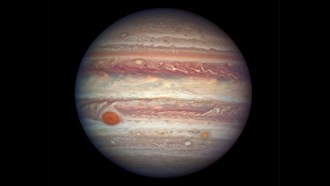
Jupiter may be the solar system’s oldest planet
Jupiter’s early existence may explain the odd arrangement of planets in the solar system, a new study suggests.
- Planets
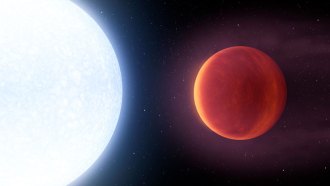
Hot, hot planet sets sizzling new record
Astronomers have discovered an odd new exoplanet. Called KELT 9b, is the hottest non-star known.
- Physics
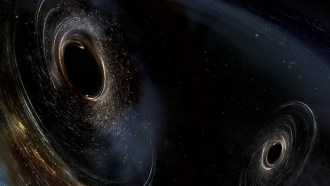
Gravitational waves detected yet again
For the third time in 16 months, scientists have announced detection of gravitational waves washing over the spacetime environment in which Earth resides. This seems to show that such waves may not be rare.
- Planets
Jupiter gets surprisingly complex new portrait
NASA’s Juno spacecraft has sent back unexpected details about Jupiter, giving scientists their first close-up of this gas giant.
- Space
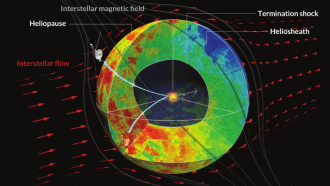
How the solar system’s tail disappeared
A bubble envelops the planets and other material in the solar system. New data show it does not have a long tail but is round.
- Physics
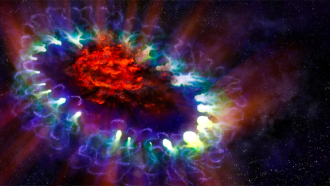
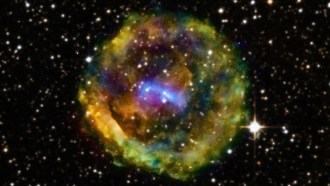
After 30 years, this supernova is still sharing secrets
It’s been 30 years since astronomers first witnessed the stellar explosion known as SN 1987A. Today, researchers are still learning from this cataclysmic phenomenon.
- Space
Scientists Say: Supernova
When a star has too much mass, it can explode. The explosion is called a supernova.
- Physics
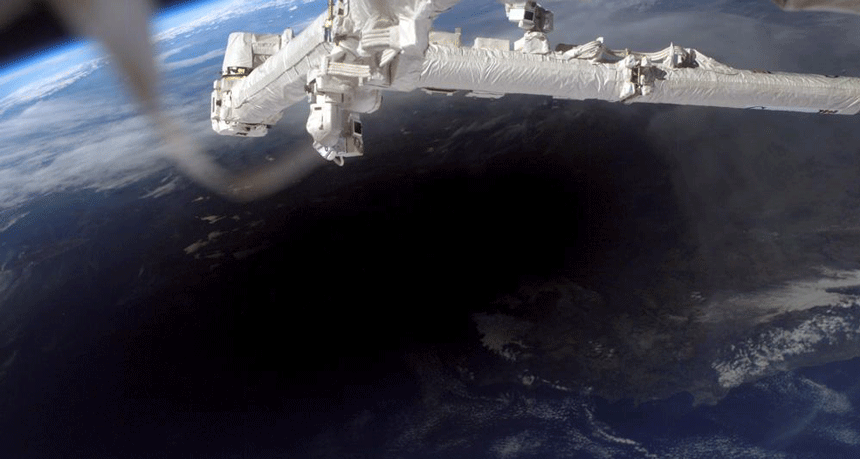
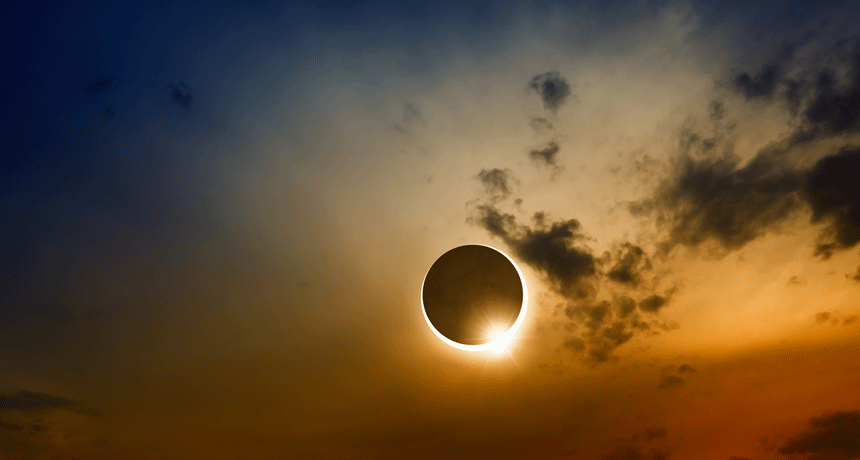
Getting ready for the solar eclipse
A total solar eclipse will race across the continental United States in August 2017. Scientists and the public are preparing to watch and learn.
- Space
Citizen scientists wanted to make an eclipse megamovie
A solar eclipse will cross the United States on August 21, 2017. Video capture by people in the eclipse’s path can help with scientific research.
- Physics
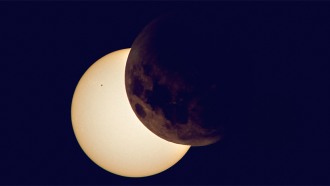
Eclipses come in many forms
Eclipses are one of nature’s most awesome spectacles, and scientists have learned a lot by observing them and related celestial alignments — occultations and transits.
- Planets
Scientists Say: Eclipse
How the sun, moon and Earth line up determines whether there’s a solar or lunar eclipse.
- Space
Cosmic mystery: Why are many galaxies dark?
Dark galaxies went unnoticed until 2015. Since then, scientists have now found more than 1,000 — and there may be many, many more.