Space
Supermassive black holes might trace back to huge, ancient stars
Hefty stars might have collapsed into “intermediate mass” black holes — the building blocks of supermassive ones, a teen’s research suggests.
Scientists suspected Mars had these zaps but had never detected them — until now. NASA’s Perseverance rover recorded them generated by dusty gusts.
Weaving together the concepts of space and time allows scientists to understand gravity and more.
Only three interstellar objects have ever been spotted. Here’s what we know about them and why they’re so cool.
Katie Mack started out building solar-powered LEGO cars as a kid. Now she studies dark matter to better understand how galaxies form and evolve.
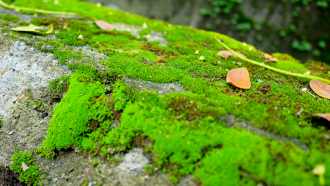
Moss spores, bacteria and tardigrades have all proved their hardiness outside the International Space Station.
Supernova remnants, stellar nurseries and more populate this new view of our galaxy, as seen from Earth’s southern hemisphere.
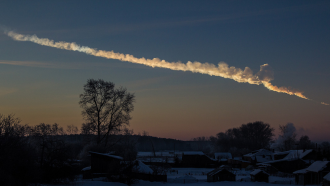
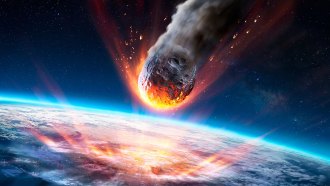
The odds of a big space rock striking the planet are higher than you might think. But don’t worry — asteroid strikes may be preventable.
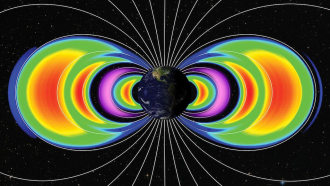
Astronomers have detected these radiation belts around Earth and beyond. Jupiter’s belt is thousands of times as intense as Earth’s.
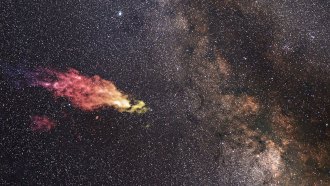
Astronomers want to know the source — and importance — of these faint, fast-moving clouds that zoom beyond and toward our Milky Way’s disk.