All Stories
- Animals
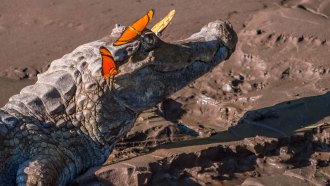
Scientists Say: Lachryphagy
Some insects land on the eyeballs of larger animals. They are seeking out the salt and proteins in the animal’s tears.
- Health & Medicine
Strongest bones come from Goldilocks recipe of exercise and rest
Building strong bones for life depends on adolescents staying active and getting enough sleep. Sometimes a lot of sleep, like 11 hours!
- Math
Meet ‘Pi’ — a new Earth-sized planet
Searching through data from NASA’s K2 Mission, researchers found a new planet. Some call it K2-315b, others smile and refer to it as “Pi Earth.”
- Chemistry
Flexible devices may help clothes solar power your screens
A fluorescent polymer duo boosts the efficiency of solar cells. One day this material may coat your jacket, hat or backpack to provide power on the go.
- Physics
Researchers reveal the secret to the perfect football throw
The tip of a spiraling football follows the ball’s path. If you know a thing or two about gyroscopes, this is not what you’d expect.
- Animals
Let’s learn about sharks
This ancient group of fish can use scent and even electricity to detect their prey. And they fill an important niche in the ocean.
- Animals
Scientists Say: Medullary bone
Medullary bone is a layer that forms inside bird and dinosaur bones. It’s a source of the calcium in eggshells.
- Brain
Can’t remember? Maybe you multitask too much between screens
Splitting your attention between devices can make it hard to create new memories, even when you’re not multitasking.
- Health & Medicine
Social distancing for teens shouldn’t mean giving up your social life
During even partial lockdowns, keeping connected with friends makes all the difference. That’s what athletes and other teen groups are finding.
- Environment
Why today’s ‘fast fashions’ can be bad for the planet
The constant buy-wear-toss cycle of fast fashion isn’t sustainable. It hurts the environment and takes a toll on our wallets, too.
- Environment
Old clothes soon may be recycled, not trashed
One day, clothes may be recycled almost as much as plastics and glass are now. See how chemists are moving us in that direction.
- Space
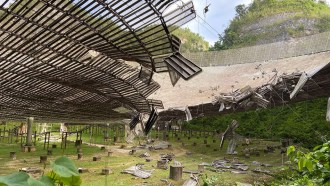
Star of science and movies, the Arecibo radio telescope is dead
Broken cables led to catastrophic damage of its history-making dish. The U.S. National Science Foundation will now dismantle what remains.