All Stories
- Brain
Adolescence appears to last far longer than once thought
The brain undergoes “rewiring” throughout adolescence and doesn’t reach its adult architecture until our early 30s, suggests a new study.
- Physics
Scientists Say: Equilibrium
This steady state may look like a total standstill, but it’s actually an equal opposition of forces.
- Earth
Build your own seismograph with this science activity
By recording earthquakes, seismographs help scientists better understand and hopefully predict quakes.
- Animals
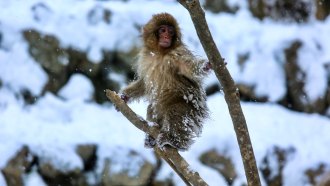
Analyze This: Primates may have evolved in the cold
Scientists thought the ancestor of humans and apes lived in the tropics. A new study points to a chilly location instead for primate evolution.
- Animals
Animals’ personalities can affect a species’ survival
From bold foxes to shy parrots, animals’ personalities are increasingly being seen as key to saving species.
- Animals
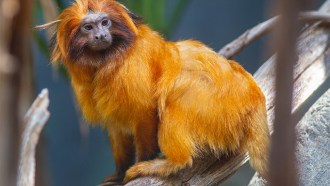
Brazilian monkeys offer lessons on how to return species to the wild
Efforts included letting golden lion tamarins roam free in urban U.S. parks. Restoring natural behaviors was key to their survival in the wild.
- Climate
Microbes that dwell in tree bark devour major climate gases
Hidden in plain sight, this huge community of tree-bark microbes dines on gases — such as methane — that warm Earth’s atmosphere.
- Animals
Mummies suggest a way to help reintroduce cheetahs to Arabia
DNA from Arabian cheetah remains reveals that these now-extinct populations might be replaced by rewilding close cheetah relatives from northwest Africa.
- Physics
Could a person ever wield lightning as a weapon?
From the shocking powers of electric eels to laser-guided lightning, aiming electricity is more real than it sounds.
- Health & Medicine
Scientists Say: Symptom
A runny nose, fever or feeling of fatigue might clue your doctor in to the right diagnosis.
- Animals
As toddlers, chimps are major risk takers
Human kiddos are generally too closely supervised to be able to monkey around as much as young chimps. Instead, older kids — teens — are usually the bigger risk takers.
- Environment
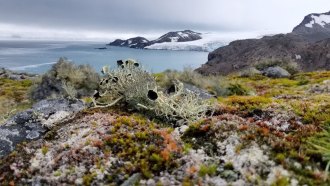
Antarctica faces a green and weedy future
Warming is allowing alien species to invade a land that had been isolated for 30 million years. They now threaten local ecosystems unique to Antarctica.