All Stories
- Science & Society
Hurdling poverty to find a life in science
In the United States, one in every six kids grows up poor. But here’s why a humble start need not keep them from a career in science or engineering.
- Science & Society
Enriching opportunities can point teens toward a STEM career
Resources abound to help middle school through college students find what it takes to build successful STEM careers. Check these out.
- Science & Society
Ten tips to prepare for a career in science and tech
Scientists and engineers who grew up poor share advice on the many paths to a rewarding career in STEM — Science, Technology, Engineering and Math.
- Animals
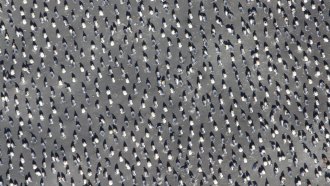
In a colony, king penguins act like a liquid
Is this a living liquid? King penguins move around within their colonies, clearing out some space, and then refilling it. That behavior resembles a liquid, scientists conclude.
- Life
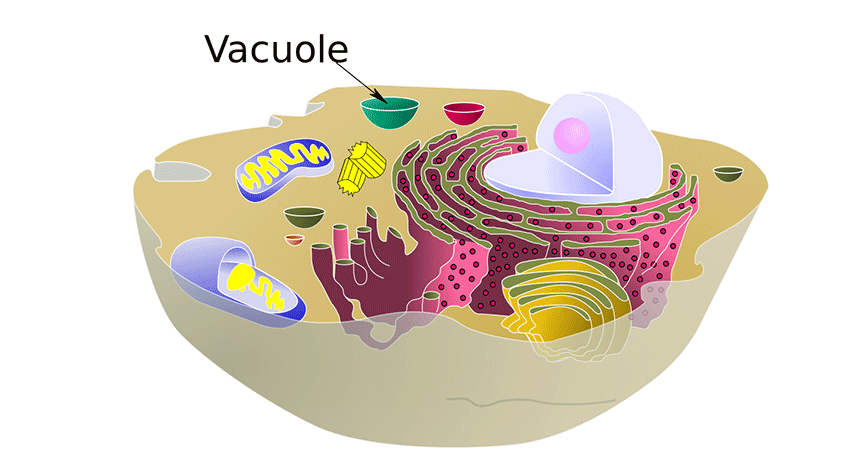
Scientists Say: Vacuole
Cells can’t always get rid of trash or digest food immediately. This week’s word describes where they store their stuff.
- Physics
An ancient plant inspires a new lab tool
Researchers have designed a lab tool that moves liquids from one place to another by mimicking a plant called a liverwort.
- Animals
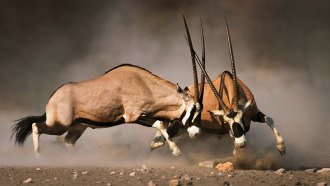
Fighting ‘like an animal’ may not be what you expect
Evolution has produced a broad range of conflict styles. And some of the best examples come from outside the world of the familiar.
- Chemistry
Hard-to-burn ‘smart’ wallpaper even triggers alarms
Scientists have made wallpaper that won’t easily burn. And embedded nanowires can be linked to a sensor to sound an alarm when the paper gets too hot.
- Earth
How long will Kilauea’s new eruption last?
A government volcano expert answers burning questions about the ongoing Kilauea eruption.
- Chemistry
Banana plant extract can slow how fast ice cream melts
Food scientists now show that adding these tiny plant particles to ice cream may delay the rate at which this treat melts into a soupy mess.
- Health & Medicine
Inked mice hint at how tattoos live on
Tattooed mice challenge our current understanding of how tattoos stay in humans.
- Animals
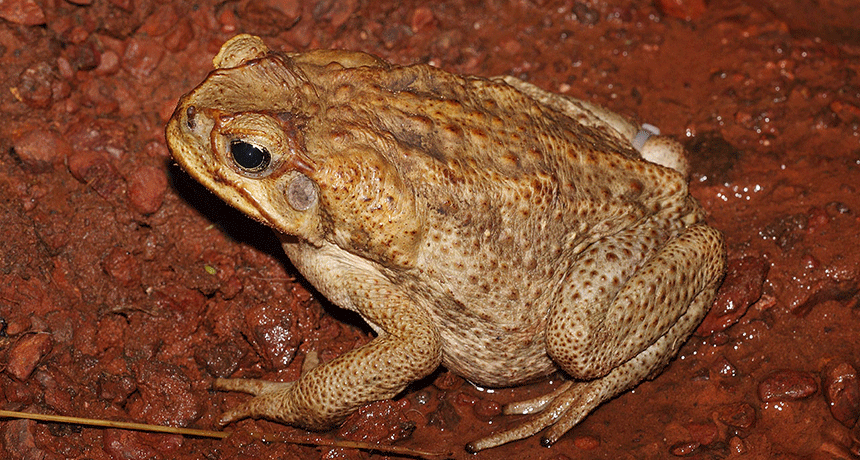
Scientists Say: Invasive species
These are foreign species that are causing problems for native organisms and ecosystems.