All Stories
- Animals
Scientists Say: Irruption
Sometimes populations of animals can suddenly increase. The word for that is irruption.
- Animals
Why you’ll never see a dirty gecko
By knowing how a gecko’s skin works, could self-cleaning, water-repelling, antibacterial clothes be far behind?
- Chemistry
Goopy tech leaves older 3-D printing in its wake
A new way of 3-D printing combines light and oxygen to create solid objects from liquid resin. The method quickly creates detailed objects.
- Chemistry
Silencing genes — to understand them
Hijacking a cell process called RNA interference can let scientists turn off a selected gene. Its silencing can point to what genes do when they’re on — and may lead to new treatments for disease.
-
Cookie Science 14: One experiment, 400 cookies
Making delicious gluten-free cookies requires testing. And this means baking a lot of cookies with scientific precision.
- Microbes
Life’s ultra-slow lane is deep beneath the sea
Biologists had suspected the deep seafloor would be little more than barren sediment. But they found a surprising amount of oxygen — and life.
- Earth
Explainer: Understanding plate tectonics
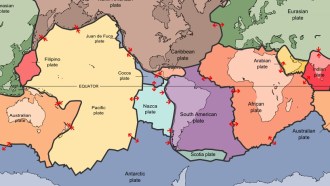
Plate tectonics is the process whereby Earth continually rebuilds itself — and causes destructive events like earthquakes and volcanic eruptions.
- Climate
Arctic warming bolsters summer heat
Rapid warming in the Arctic is sapping summer storms of their power to cool. That worsens heat waves across the Northern Hemisphere.
-
Teen helps plants fight off pests
When plants are attacked by predatory worms, often they don’t fight back. A teen studied why and used those findings to help the plants defend themselves.
- Computing
3-D Recycling: Grind, melt, print!
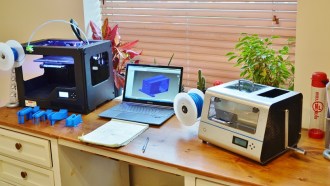
A new 2-in-1 desktop machine quickly recycles plastic trash into low-cost 3-D printer ‘ink’ at the push of a button.
- Chemistry
Scientists Say: Fulgurite
When lightning strikes in the right place, it can fuse minerals together in a glassy structure.
- Physics
‘Smart’ clothes generate electricity
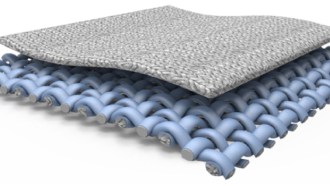
Scientists in South Korea have developed a fabric that captures energy from its wearer’s motions and turns it into electricity.