All Stories
- Planets
Distant world hosts water
One measure of an extraterrestrial world’s potential for supporting life is the presence of water. The Neptune-size HAT-P-11b fits that criterion.
- Materials Science
Nobel goes for making white LEDs possible
The 2014 Nobel Prize in Physics has been awarded to scientists who discovered how to make blue light-emitting diodes. People really wanted white LEDs. The missing ingredient in making them was a building block: the blue LED.
- Health & Medicine
Artificial sweeteners may evict good gut microbes
People use saccharin and other artificial sweeteners to try to stay healthy. A study now suggests such sweeteners might actually cause harm by encouraging the wrong bacteria to grow in our guts.
- Brain
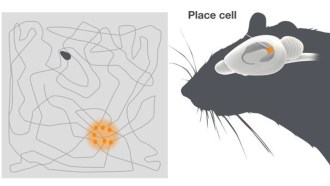
Nobel goes for finding brain’s ‘GPS’
The 2014 Nobel Prize in Physiology or Medicine has been awarded to scientists who discovered how the brain maps our place within our environment.
- Tech
Squishy robot propelled by ka-pow!
This is not your average robot. It flies through the air, propelled by an explosion in one of its arms. It could prove useful in disaster areas or war zones.
- Animals
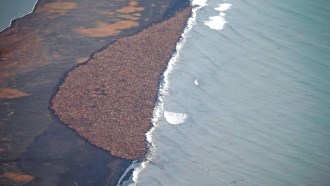
Picture this: Too many walruses
A giant herd of walruses have hauled out onto a beach in Alaska. They don’t belong there, but with no ice nearby, they have taken to land.
- Tech
Repelling germs with ‘sharkskin’
A biotechnology company has found a way to repel superbugs without toxic chemicals. It mimics the texture of a shark’s skin.
- Animals
Rare as a rhino
Most species are rare. Some have always been rare. A problem develops when people are responsible for accelerating a species’ rarity to the point that extinction threatens.
- Earth
Explainer: The volcano basics
Here’s an overview of what they are, where they form and the many ways they pose dangers.
- Health & Medicine
News Brief: U.S. gets its first Ebola case
Although U.S. hospitals have treated a handful of American health-care workers who had become exposed to Ebola in Africa, the first case of a sick traveller has emerged. His Ebola infection showed no symptoms until several days after he reached Texas. (Update: On October 8, the man died.)
-
Scientists need help to pinpoint penguins
We all love looking at penguins. Now, you can help scientists by hunting for them in photos.
- Fossils
Early dino-era start for modern mammals
Fossils of an extinct group of rodent-sized mammals suggest they were related to modern mammals. These ancient remains push back the origin of mammals by many millions of years.