All Stories
- Animals
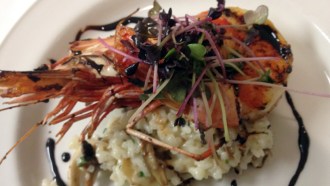
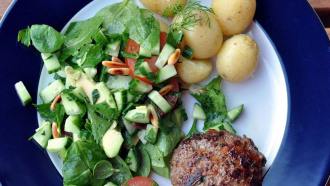
Chef puts eco-bullies on the menu
Some immigrant species can become a nuisance, eating up or displacing the natives. Often people find little incentive to catch and remove the newcomers — unless they find them too yummy to pass up.
-
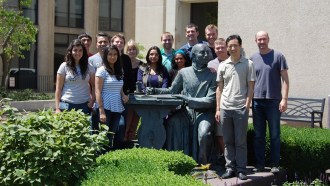
High school students fill university lab with energy
A Chicago scientist found high school students brought hard work and enthusiasm into his lab.
-
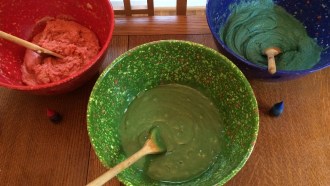
Cookie Science 5: ‘Blinding’ your subjects
When designing a cookie experiment, you need to make sure that your tasters can’t tell which cookies they taste.
- Animals
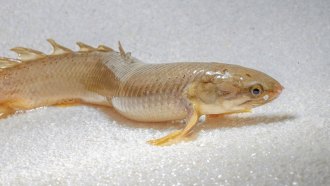
A fish out of water — walks and morphs
When this modern ‘walking’ fish was raised on land, its body changed. How it adapted resembles some prehistoric fish. These alterations hint at evolutionary changes that may have made life on land possible.
- Planets
Asteroids: A stepping stone to Mars?
NASA's Asteroid Redirect Mission, designed to capture and move an asteroid, may be a step toward getting to Mars. But not everyone agrees it's the right step.
- Brain
Mistakes: A key to learning
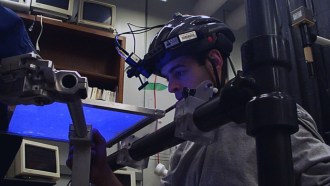
This man uses a robotic arm to move a cursor across a computer screen. The screen blocks his view of his hand and arm. This focuses his attention on any errors he makes as he tries to move a cursor to a target location.
- Tech
Soaking up oil spills — with cotton
Natural, low-grade cotton could help clean up oil spills better than synthetic materials, a new study finds. And unlike synthetics, cotton breaks down naturally.
- Tech
Plants ‘listen’ for danger
Scientists used lasers to show that plants can “hear” insect pests. Those leafy plants then mount a chemical attack in response to the bug’s chewing sounds — but not toward harmless noises such as a gentle breeze or a bug’s mating call.
-
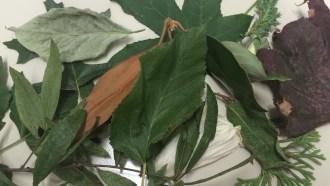
Free app for tree ID needs work
Leafsnap is an app that identifies local trees. Unfortunately, the app is difficult to work with and has some technical problems.
- Brain
Learning rewires the brain
Brain cells actually change shape as we learn. It’s one way we cement new knowledge. And much of the action happens as we sleep.
-
Cookie Science 4: Cookie ethics
I may just be asking people to eat cookies, but if I’m doing science, I also need to make sure I am treating everyone fairly and that no one gets hurt.
- Health & Medicine
Starchy foods may cut meaty risks
Eating red meat can increase the risk of certain types of cancer. But scientists have discovered that eating potatoes and other foods containing 'resistant' starch can help limit those risks.