All Stories
- Plants
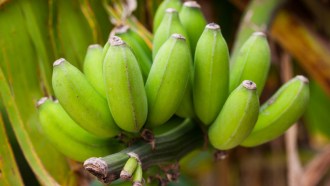
Saving the banana
A number of diseases threaten the world’s most popular fruit. Scientists are working to fight these blights. But if they don’t succeed, the sweet banana that’s a breakfast staple could disappear.
- Chemistry
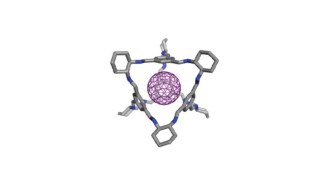
New nano-cages snag and hold gases
Molecular traps have been developed to snag and hold noble gases, such as krypton, xenon and radon. These atoms tend to resist arrest. But the new traps might grab onto polluting gases so that they can be recycled for later beneficial uses.
- Health & Medicine
Ebola emerges in the Congo
The Democratic Republic of Congo (formerly Zaire) is where the Ebola virus was first discovered in 1976. This nation has just been hit again by the disease. Scientists suspect this is a new and independent outbreak — not a spread of the epidemic ravaging West Africa.
- Planets
Asteroids: Avoiding an Earthly smashup
Any of nearly 1,500 asteroids could hit Earth. Experts want to learn more about the space rocks — and maybe even bump them off course.
- Planets
Explainer: What are asteroids?
Leftovers from the creation of the solar system, asteroids are space rocks that orbit the sun. Let’s hope the big ones never become meteorites.
- Tech
Invisible plastic ‘ink’ foils counterfeiters
Hidden images make a new label virtually counterfeit-proof, thanks to a combination of chemistry and nanotechnology.
-
Cookie Science 3: The lab notebook
Every good scientist keeps a lab notebook. It’s a careful record of every step of testing and every observation. A lab notebook means that you can review all details of your work long after its done — and other people can try to verify your findings with their own tests.
- Health & Medicine
Ebola treatments and vaccines could be near
Using experimental medicines against Ebola might help to slow or end an outbreak in Africa that has defied efforts to control it.
- Health & Medicine
Explainer: What is Ebola?
A virus is behind the hemorrhage-inducing infection called Ebola. It causes fevers and often intense bleeding — seemingly from anywhere and everywhere.
- Fossils
Feathers: What every dino wore?
A dino discovery in Siberia suggests feathers were common among the ancient ‘lizards.’
- Health & Medicine
Cookie Science 2: Baking a testable hypothesis
I would like to make a gluten-free cookie that my friend can eat. But to do that, I need to come up with a hypothesis to test.
- Microbes
Buried Antarctic lake teems with life
Last year, scientists drilled 800 meters (roughly a half mile) down through ice to reach a pitch-black Antarctic lake. They now report that lake hosts a thriving community of one-celled microbes.