All Stories
-
Students in lab learn not to fear failure
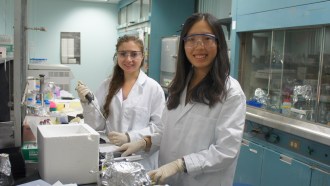
Scientific papers often look like nothing but success. But two high school students learn that failure can be a step to success. You just have to learn from it.
- Health & Medicine
Fist bumps cleaner than handshakes
A handshake, while welcoming, can transmit lots of germs — many times more than a high five or, especially, a fist bump.
- Animals
Germs explain some animal behaviors
The bacteria that people and other animals host in and on their bodies are invisible to the eye. Yet they can play a very visible role in behavior. It’s something scientists are just coming to appreciate.
- Animals
Wind farms: Restaurants for seals?
Scientists have tracked harbor seals visiting the turbines of ocean wind farms. The predators may be drawn by fish that make their homes in the artificial reefs created by the manmade structures.
- Earth
Meteorites likely wiped out Earth’s earliest life
Enormous meteorites appear to have slammed into Earth several times early in its history. Each mega-smashup would have boiled off oceans and obliterated any bit of life.
-
Welcome to Cookie Science!
You don’t need a fancy laboratory or equipment to do science. Here, we show you how to conduct experiments at home — even in your kitchen.
- Animals
How termites ‘hear‘ about trouble
When danger comes too close, termites bang their heads against the walls of their homes. This action sends out a warning vibration that others ‘hear’ with their legs.
-
Find floating forests for science
Kelp, a large type of seaweed, provides food and habitat for many ocean creatures. Now, scientists need your help to find out where kelp beds are and how they might be changing.
- Environment
Watering plants with wastewater can spread germs
Recycled waste water may slake the thirst of outdoor plants. But it also can spread bacteria, a new study finds — germs that antibiotics may not be able to kill.
-
Teen’s lab experience benefits her mentor, too
Pairing a high school student with a graduate student helped the teen learn about science. But her ‘teacher’ may have learned just as much.
- Animals
Octopus sets egg-nurturing record
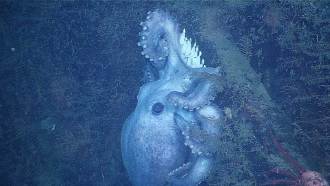
Animals will do extraordinary things to help their babies survive. Consider ‘Octomom:’ She sat on one clutch of eggs for nearly 4.5 years.
- Tech
Fashioning inks to ‘print’ tissues
3-D printing may one day create life-saving tissues and organs for transplants. But first researchers are learning how to tailor cell-filled “inks” for use in inkjet printers.