All Stories
- Animals
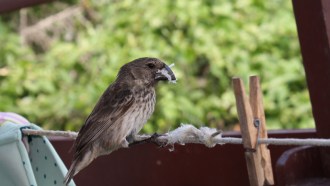
Helping birds doctor their babies
Darwin’s finches will soften their nests by weaving in fibers, such as stray bits of cotton. An observant biologist offered those birds some insecticide-treated cotton and the birds took it, which saved their young from deadly parasites.
- Health & Medicine
For better weight control, fiber up!
Certain types of fiber suppress appetite, at least in mice. Found in fruits, vegetables, oats and barley, this fiber breaks down in the gut to release acetate. That travels to the brain, where the chemical prompts the release of hunger-fighting hormones.
- Tech
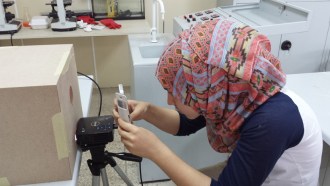
Fighting theater pirates
How can theaters thwart thieves from unlawfully recording a movie during a showing? A high-school freshman’s low-cost solution relies on simple physics.
- Tech
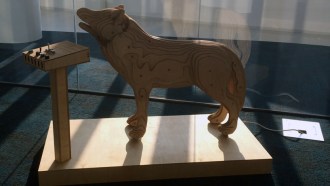
Making magic with mechanical engineering
As kids, we all want to make magic. But Michelle Phillips took that dream further. She realized that she wanted to build rides for amusement parks.
- Chemistry
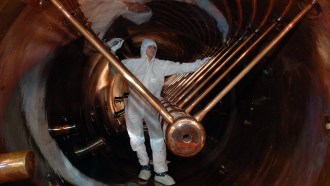
Scientists confirm element 117
Scientists have confirmed the existence of a new, short-lived superheavy element. For now, they’re calling it ununseptium.
- Brain
The scent of a woman — or a man
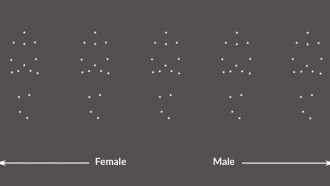
Animals unwittingly signal things about themselves by giving off subtle scents. A new study claims the same is true for people.
-
Sharing a love of science with the world
Julia Paoli has starter her science career in high school, writing a science blog at Scitable to teach the world about viruses.
- Computing
Electricity: Cutting the cords
Engineers are working to charge more wireless gadgets — without relying on cords and plugs.
- Planets
A ‘Goldilocks’ world?
Scientists have spotted a faraway planet that is nearly the size of Earth and could host liquid water. It's too far to visit, but astronomers say the galaxy could be littered with such potentially habitable worlds. Don't hang up yet, E.T.
- Animals
Move over cheetah: Mite sets new speed record
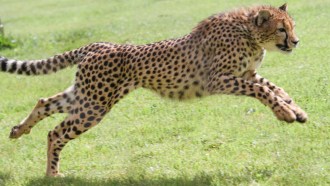
A super-speedy species sprints faster than any other land animal — for its size, a new study finds. Scientists may someday tap this tiny mite’s technique to create robots and other devices that zip around at sensational speeds!
- Science & Society
Students use STEM to help their community
Every community has its problems. A nationwide contest encourages students to tap science to solve local needs.
- Animals
Don’t mess with a frustrated fish
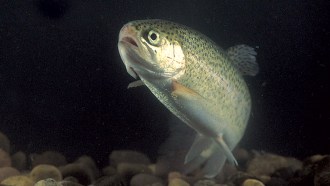
When a trout doesn't get the snack it expected, look out. These fish get aggressive. Sometimes they can defeat even bigger fish.