All Stories
- Earth
Don’t let the bedbugs bite
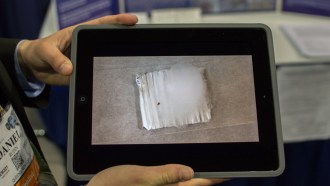
A trio of teens has found a nontoxic way to stop bedbugs dead in their tracks. The method relies on a mesh of fibers that a bug can step into easily — but never leave.
- Oceans
Digging a trench to stop a tsunami
Boyd Kane built his own wave tank to study tsunamis and how he might change the seafloor to stop their advance.
- Animals
Mite-y discoveries!
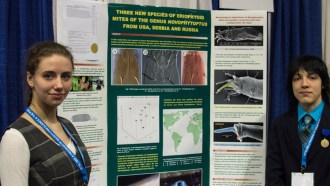
Two teens from Russia discovered tiny mites living inside grass-like plants called rushes. Three of the species they turned up are new to science.
- Health & Medicine
Beautiful nails may harbor germs
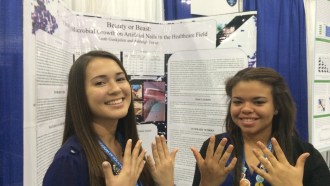
Two students wondered why they weren’t allowed to wear fake nails as nursing assistants. They decided to use science to probe why. What they found sent them to the Intel International Science and Engineering Fair.
- Animals
Electronics may confuse a bird’s ‘compass’
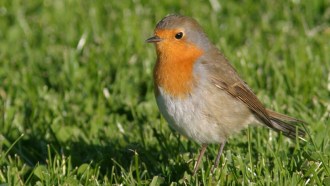
Birds use Earth’s magnetic field to help guide them as they migrate. A new study suggests that electromagnetic radiation given off by some electronic devices may act like “noise” and confuse the long-traveling birds.
- Animals
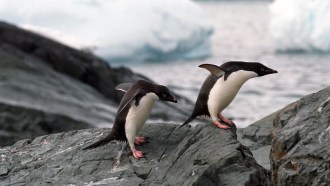
Even penguins get the flu
Scientists have just identified ‘live’ bird flu virus in Antarctic penguins. But the infections may not be novel. There are some signs these germs have been infecting local wildlife for up to 80 years.
- Science & Society
Teen’s cancer research scores big at Intel ISEF competition
Seventeen teens grabbed top honors at the world’s premier high-school science competition. A 15-year old cancer researcher got to take home $75,000.
-
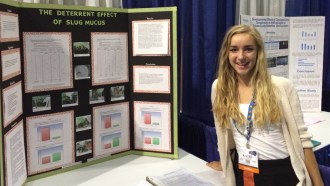
Slime: A new way to protect plants from slugs
Katie Gwaltney had a slug problem in her garden. She decided to try using the slugs’ own slime against them. Her findings earned the high school freshman a finalist’s spot at this week's Intel International Science and Engineering Fair.
- Animals
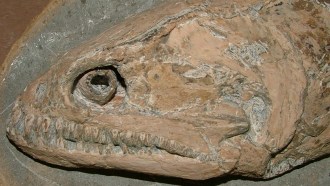
Surprise! Fossils in a flash
By studying how dead tissues decay — or turn to ‘instant’ fossils — scientists are gleaning helpful clues to what ancient life looked like.
- Tech
The road less worn
Two teens have found a new use for old tires. By grinding them up and adding them to asphalt, the old rubber can create stronger, longer-lived roads. And the bonus: The process recycles tires that might otherwise have been burned, creating pollution.
-
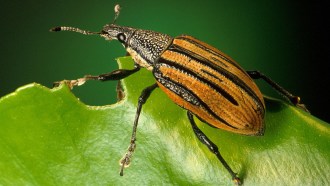
Studying a weevil to save a tree
A root weevil is causing billions of dollars in damage to fruit trees in Florida. To save a tree of his own, Evan MacKay decided to study the pest, earning him a finalist’s spot at the Intel International Science and Engineering Fair.
-
Solving bad breath one walnut at a time
Two teens came up with a cheap and simple solution to halitosis. It’s the African walnut.