All Stories
- Animals
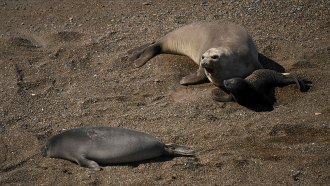
In 2024, bird flu posed big risks — and to far more than birds
Cows, elephant seals and polar bears are among unexpected bird flu casualties. Learn about potential risks to them, to people and to our food supplies.
- Animals
Can furry pets get H5N1 bird flu and spread it to us?
The 2024 pandemic-style bird flu circulating in birds has shown up in cats and other pet species.
- Chemistry
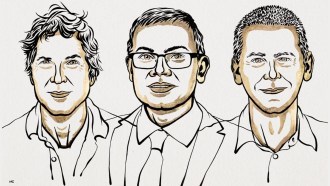
Predicting and designing protein structures wins a 2024 Nobel Prize
A biochemist and two computer scientists using AI shared the top award in chemistry.
- Artificial Intelligence
ChatGPT and other AI tools are full of hidden racial biases
In tests, AI programs would recommend people who use African American English for less prestigious jobs and harsher punishments for serious crime.
- Artificial Intelligence
Explainer: What is generative AI?
New bots are emerging all the time that can create — at your direction — images, computer code, articles, ads, songs and more.
- Artificial Intelligence
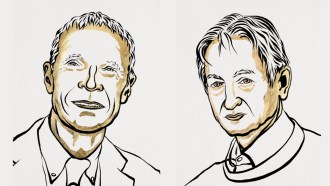
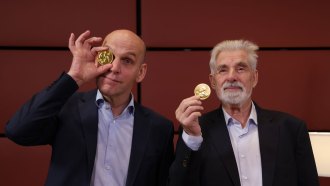
Two AI trailblazers win the 2024 Nobel Prize in physics
John Hopfield and Geoffrey Hinton used brain-like networks based on principles of physics to jump-start machine learning.
- Genetics
The discovery of microRNA wins the 2024 Nobel Prize in physiology
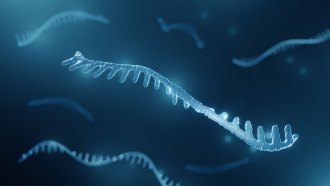
Victor Ambros and Gary Ruvkun discovered tiny snippets of genetic material, called microRNAs, that play a big role in making sure cells work as they should.
- Science & Society
Let’s learn about the Nobel Prize
Nobel Prizes are the highest honors in science. But the prizes are far from perfect measures of scientific impact.
- Space
Spacecraft need an extra boost to travel between stars
Star Wars makes space travel look easy by breaking the laws of physics. Off-screen, the technology for spacecraft to reach other worlds doesn’t exist yet.
- Archaeology
Scientists Say: Stone Age
This vast, mysterious stretch of time marks the dawn of human civilizations.
- Microbes
More than 100 types of bacteria found living in microwave ovens
More than 30 microwave ovens were sampled in a range of different settings. The microbes in them included ones that can cause food poisoning in people.
- Chemistry
Explainer: How cells use chemistry to make the electricity of life
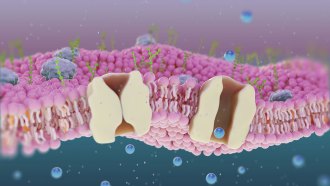
Charged particles, or ions, constantly move in and out of cells. These migrations produce tiny electric currents, which power your brain, heart and more.